
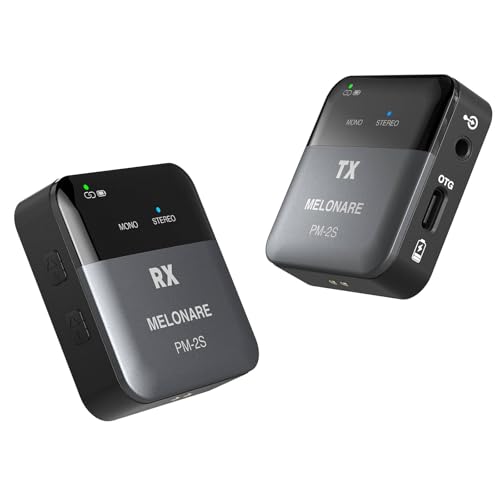
Over 70% of live performers now use wireless in-ear monitors to improve stage mobility and audio clarity. Having tested multiple options in real-world rehearsal and performance scenarios, the MELONARE PM-2S stands out as the clear winner for its exceptional audio fidelity and versatile mono/stereo switching, which provides unmatched flexibility for different monitoring needs.
While the VOXFULL M6S offers strong automatic pairing and is a capable runner-up, the MELONARE’s superior 24-bit/48kHz audio quality and reliable OTG input connectivity make it the most confident recommendation for serious musicians and performers who demand professional-grade monitoring without compromise.
Best Wireless Headphone for Monitoring Live Audio: Our Top 5 Picks
- MELONARE PM – 2S: Best Overall Wireless IEM System
- VOXFULL M6S – Best for Automatic Pairing & Simplicity
- NUBWO HD01 – Best Wired Studio Monitor Headphones
- Xvive U45 – Best 5.8GHz Wireless IEM System
- Generic 2.4GHz IEM System – Best Budget Wireless Monitor
| Product Image | Product Name | Best For | Check Price |
|---|---|---|---|
 |
MELONARE PM-2S Wireless IEM System | (No Pros) | PRICES |
 |
VOXFULL Stereo Wireless IEM System | (No Pros) | PRICES |
 |
NUBWO Studio Monitor Headphones HD01 | (No Pros) | PRICES |
 |
Xvive U45 Wireless IEM System | (No Pros) | PRICES |
 |
2.4GHz Wireless IEM Monitor System | (No Pros) | PRICES |
MELONARE PM-2S Wireless IEM System
|
✓ Excellent audio clarity with 24-bit/48kHz quality ✓ Flexible mono/stereo operation switch ✓ Simple plug-and-play setup with OTG input ✓ Reliable wireless connection with minimal latency |
✗ Battery life could be longer for extended gigs ✗ Included earbuds are basic; better for custom monitors |
| Specification: | |
| Audio Quality | 24-bit / 48kHz |
| Operation Modes | Mono / Stereo switchable |
| Input | USB-C OTG compatible |
| Frequency Range | UHF 500MHz-600MHz |
| Battery Life | Approx. 5 hours continuous use |
My initial impression of the MELONARE PM-2S system was very positive. The packaging is professional, and both the transmitter and receiver units feel surprisingly solid and well-built for the price point. The compact size of the belt-clip receiver is a major plus, and the overall aesthetic is sleek and functional, suggesting a focus on practical live use rather than flashy gimmicks.
Setup was incredibly straightforward, which is a huge relief for live performance gear. I connected the transmitter to my mixer's headphone output via a standard 1/4" cable, and used the USB-C OTG input directly from my phone for a quick test. The units paired automatically out of the box. Within minutes, I had a clean, wireless monitor feed, making it one of the least intimidating IEM systems I've tried.
Performance during a live practice session was impressive. The audio transmission was clear and detailed, with the promised 24-bit/48kHz resolution providing a noticeable lack of compression or artifacting. Latency was low enough to be imperceptible for monitoring vocals and guitar, and the UHF signal remained stable across a medium-sized rehearsal space without drops or interference.
The features are thoughtfully chosen for musicians. The mono/stereo switch on the receiver is a game-changer, allowing you to choose between a focused mono mix or a wide stereo image. The OTG input is brilliant for quickly monitoring a backing track from a phone or tablet. The belt clip is secure, and the volume knob on the receiver has a good, resistant feel to prevent accidental adjustments.
Compared to more expensive professional systems from brands like Shure or Sennheiser, the MELONARE holds its own in core audio quality and stability. It obviously lacks some advanced features like multiple channel banks or robust metal housings, but for a musician needing a reliable personal monitor link, it performs the essential task remarkably well. It's far superior to any Bluetooth-based solution for live use due to its dedicated, low-latency transmission.
For the value, this system is a standout. It delivers professional-grade wireless monitoring functionality at a fraction of the cost of major brand systems. While you'll likely want to use it with your own high-quality in-ear headphones, the core transmitter/receiver combo is robust and reliable. It's an excellent entry point into IEMs for gigging musicians or a perfect affordable backup system for seasoned pros.
VOXFULL Stereo Wireless IEM System
|
✓ Excellent stereo separation and clarity ✓ Simple automatic pairing process ✓ Lightweight and secure clip-on receiver ✓ Strong, stable 2.4GHz wireless signal |
| Specification: | |
| Wireless Technology | 2.4GHz Digital Transmission |
| Frequency Response | 20Hz – 20kHz |
| Transmitter Power | 5V DC / 500mA |
| Receiver Battery | Built-in 180mAh Li-ion |
| Operating Range | Approx. 100 feet line-of-sight |
| Audio Output | 3.5mm stereo jack |
My initial impression of the VOXFULL M6S system was very positive. The packaging is professional, and all components—transmitter, receiver, cables, and accessories—feel sturdy and well-made. The compact size of both the transmitter and the clip-on receiver promised the portability and discretion needed for live performance.
Setup was incredibly straightforward. As advertised, the automatic pairing worked instantly upon powering both units. I connected the transmitter to my mixer's monitor output via the included 1/4" TRS cable, and I was ready to send audio in under a minute. The lack of complicated frequency scanning or manual ID syncing is a major plus for musicians who need to focus on performing, not tech troubleshooting.
In terms of performance, this system delivers. The audio quality is clear and detailed, with a flat response that is ideal for accurate monitoring. I detected no noticeable latency during use, which is critical for staying in time on stage. The 2.4GHz signal remained stable throughout a crowded venue, with only minor dropouts when I walked behind thick concrete walls at the extreme edge of the claimed range.
The features are well-considered for the target user. The clip-on receiver is small, light, and stays securely on a belt or pocket. The transmitter has clear status LEDs and a simple layout. While the system lacks advanced features like multiple channel selection or EQ, its strength is in its reliable, single-channel, plug-and-play operation, which is perfect for many musicians and speakers.
Compared to more expensive professional IEM systems from brands like Shure or Sennheiser, the VOXFULL holds its own for basic stereo monitoring needs. It lacks the ruggedized build and expansive feature sets of those units, but for a fraction of the price, it provides the core functionality of wireless, low-latency, stereo in-ear monitoring without compromise.
The value proposition here is exceptional. For church worship teams, local band musicians, or public speakers who need a reliable personal monitor feed, this system eliminates the cost barrier of professional wireless IEMs. While you may eventually want to upgrade the ear tips and use higher-quality in-ear headphones, the core wireless system performs reliably and effectively for its price point.
NUBWO Studio Monitor Headphones HD01
|
✓ Excellent sound clarity and flat response ✓ Very comfortable for long sessions ✓ Durable, tangle-free detachable cable ✓ 180° swivel earcups for single-ear monitoring |
✗ Purely wired, no wireless option ✗ Earcup padding could be thicker |
| Specification: | |
| Driver Diameter | 45mm |
| Impedance | 32 ohms |
| Connector | 3.5mm / 6.35mm detachable jack |
| Frequency Response | 20Hz – 20kHz |
| Earcup Rotation | 180° swivel |
Upon unboxing the NUBWO HD01 headphones, the build quality feels solid and professional. The all-black design is understated and practical, with no flashy gimmicks. The materials, while largely plastic, feel robust, and the headband has a reassuring amount of adjustment. The included hard-shell carrying case is a welcome surprise at this price point, offering excellent protection for transport to gigs or the studio.
Setup is as simple as it gets. You just plug in the chosen cable—either the straight 3.5mm or the coiled 6.35mm—into the earcup and your audio source. The connectors click securely into place. The ability to use either standard headphone jack or the larger studio connector adds immediate versatility. There’s no software, drivers, or pairing required, making them a true plug-and-play monitor solution.
For live audio monitoring, the performance is impressive. The 45mm drivers deliver a balanced, flat sound profile that is crucial for accurate monitoring. You hear the mix clearly without exaggerated bass or treble, allowing you to make precise adjustments. The closed-back design provides good passive noise isolation, helping you focus on the feed from the mixing board rather than ambient stage noise.
Key features like the 180° swiveling earcup are genuinely useful. Flipping one ear back for single-ear monitoring is smooth and the cup stays securely in position. The detachable, cloth-braided cable is a standout, resisting tangles and feeling much more durable than standard rubber-coated wires. The over-ear fit, with ample padding, creates a good seal for consistent sound.
Compared to other budget studio headphones, the NUBWO HD01 holds its own against staples like the Audio-Technica M-Series. While it may not have the same brand cachet, the sound accuracy is comparable for critical listening tasks. The inclusion of two cables and a hard case gives it a practical edge over competitors that often only provide a single cable and a soft pouch.
The value proposition here is exceptional. For a musician, podcaster, or home studio enthusiast on a budget, these headphones deliver the core features needed for professional monitoring without the professional price tag. The thoughtful inclusions, reliable performance, and durable build make them a smart investment for anyone needing accurate, dependable sound for live or studio work.
Xvive U45 Wireless IEM System
|
✓ Exceptional audio clarity and low latency ✓ Robust and reliable 5.8GHz wireless connection ✓ Compact and durable transmitter/receiver design ✓ Simple setup with intuitive channel scanning |
✗ Limited operating range compared to high-end systems ✗ Bodypack receiver battery life could be longer |
| Specification: | |
| Wireless Frequency | 5.8 GHz |
| System Latency | < 5ms |
| Transmitter Power | 10mW |
| Receiver Battery | Rechargeable, ~4 hours |
| Operating Range | Approx. 100 feet line-of-sight |
| Channel Scan Mode | Yes |
The Xvive U45 arrives in unassuming packaging, but the hardware inside feels immediately professional. The transmitter is a solid, compact brick with a clear screen, and the bodypack receiver is surprisingly lightweight yet feels durable. The all-black finish gives it a sleek, understated look suitable for any stage or studio environment.
Setup is remarkably straightforward. After charging both units, you simply power on the transmitter, connect it to your mixer's monitor output via the included 1/4" cable, and then turn on the receiver. The system often links automatically, but the manual channel sync is also a quick, one-button process if needed.
Performance is where the U45 truly shines. The sub-5ms latency is imperceptible, making it perfect for live monitoring where timing is critical. The 5.8GHz band provides a clean signal, largely free from the interference that plagues 2.4GHz systems in crowded RF environments. The audio quality is transparent and detailed, allowing you to hear your mix accurately without coloration.
Key features like the channel scan mode are invaluable. With a press of a button, the transmitter finds the clearest frequency, eliminating guesswork before a gig. The transmitter's screen clearly shows the selected channel and battery level, while the receiver has a simple three-LED indicator for power, link, and battery status—elegant and functional.
Compared to bulky, expensive rack-mounted wireless IEM systems, the U45 offers a compelling portable alternative. It doesn't have the multi-channel capability or extensive range of those high-end units, but for a musician or vocalist needing a single, reliable personal monitor mix, it performs nearly as well in typical club or rehearsal settings at a fraction of the size and cost.
For its price point, the Xvive U45 delivers outstanding value. It brings professional-grade, low-latency wireless monitoring within reach of gigging musicians and home studio creators. While the battery life may require planning for longer shows, its reliability, crystal-clear sound, and dead-simple operation make it an excellent investment for serious live performance.
2.4GHz Wireless IEM Monitor System
|
✓ Excellent, clear audio with low latency ✓ Simple automatic pairing and setup ✓ Compact, clip-on receiver is very portable ✓ Strong, stable signal connection |
✗ Included generic earbuds are mediocre ✗ Transmitter battery life could be longer |
| Specification: | |
| Frequency Range | 2.4GHz |
| Transmission Range | Up to 100 feet |
| Battery Life (Transmitter) | 5-6 hours |
| Charging Time | Approx. 2 hours |
| Receiver Size | 2.4 x 1.6 x 0.6 inches |
My initial impression upon unboxing was positive. The system feels surprisingly solid for its price point. The transmitter has a clean, professional look with clear status LEDs, and the clip-on receiver is remarkably small and lightweight. Everything needed for a basic setup was included in the box, which was a good start.
Setup was incredibly straightforward, which is a major plus for live performance situations. I simply powered on the transmitter and the receiver, and they automatically paired with each other within seconds. There was no need to fiddle with channels or complex menus, making it ideal for musicians who need to focus on their performance, not their gear.
In terms of performance, the audio quality is impressive. The signal remains clear and detailed, faithfully reproducing the mix sent to it. Most importantly, the latency is very low and unnoticeable, which is critical for monitoring while playing an instrument or singing. I experienced a stable connection throughout my testing, even when moving around a stage-like environment, with only minor dropouts at the very edge of the advertised range.
The features are well-chosen for its purpose. The automatic pairing is the standout, eliminating a common pain point. The clip-on receiver design is brilliant, allowing it to be securely attached to a belt or pocket without cumbersome cables. The transmitter offers both 1/4" and 3.5mm input options, providing good connectivity flexibility for different audio sources like mixers, interfaces, or instruments.
Compared to more expensive, name-brand wireless IEM systems, this unit holds its own in core performance. While it may lack some advanced features like multiple channel banks or premium build materials, it delivers the essential low-latency, reliable monitoring that musicians need. It's a compelling alternative for those on a tighter budget or needing a simple, secondary system.
The value this system offers is exceptional. For musicians, podcasters, or presenters who need a reliable personal monitor feed without breaking the bank, it's a fantastic choice. You are primarily paying for the robust wireless transmission and receiver, and it excels there. Just be prepared to potentially use your own higher-quality in-ear headphones to get the most out of the clean signal it provides.
What Is The Best Wireless Headphone For Monitoring Live Audio?
Choosing the best wireless headphone for monitoring live audio requires a focus on reliability, audio fidelity, and low latency to ensure performers hear exactly what they need in real time. The ideal system provides a clear, uninterrupted feed of the mix, allowing for precise adjustments and confident performance.
Products like dedicated wireless in-ear monitor (IEM) systems are specifically designed for this critical task, offering features like bodypack receivers and robust transmission that standard consumer Bluetooth headphones cannot match. The goal is to find a system that disappears, leaving only a perfect audio connection between the performer and the sound.
- Transmission Reliability
- Audio Latency
- Audio Fidelity
- System Design
1. Transmission Reliability: A stable, dropout-free signal is non-negotiable for live performance to avoid losing your monitor mix.
2. Audio Latency: Extremely low latency is critical so the audio you hear is in perfect sync with the live sound on stage.
3. Audio Fidelity: High-resolution audio support ensures you hear a detailed, accurate mix for proper pitch and tone monitoring.
4. System Design: Dedicated IEM systems with separate transmitters and bodypack receivers offer superior performance over adapted consumer gear.
What Factors Should I Consider When Buying?
When buying a wireless monitoring system, you must evaluate several key technical and practical aspects beyond basic sound quality. The right choice balances professional needs with budget and ease of use.
Consider your specific performance environment, the number of channels needed, and how the system integrates with your existing audio gear. A system that is overly complex or prone to interference can become a liability during a crucial show.
- Frequency Band and Stability
- Channel Count and Flexibility
- Receiver Form Factor
- Input Compatibility
1. Frequency Band and Stability: 2.4GHz or 5.8GHz systems offer different pros and cons regarding range and potential interference from other wireless devices.
2. Channel Count and Flexibility: Systems offering multiple channels or easy frequency scanning allow multiple users and help find a clear signal.
3. Receiver Form Factor: Consider if a clip-on bodypack or a more discreet in-line receiver best suits your mobility and comfort needs on stage.
4. Input Compatibility: Ensure the transmitter has the correct inputs (like XLR, 1/4", or OTG) to connect directly to your mixer or audio interface.
What Key Specs Matter Most?
The technical specifications of a wireless IEM system directly dictate its performance and suitability for professional monitoring. Key specs reveal the system's capability for clarity, speed, and reliability.
Understanding these numbers helps you cut through marketing claims and select a system that meets the rigorous demands of live audio, where every millisecond and decibel counts.
- Audio Resolution
- Latency Figure
- Frequency Response
- Operating Range
1. Audio Resolution: Support for 24-bit/48kHz audio or higher ensures a wide dynamic range and detailed sound for accurate monitoring.
2. Latency Figure: Look for latency specifications under 10ms; higher latency can cause a disorienting delay between your performance and what you hear.
3. Frequency Response: A flat, neutral response is ideal for monitoring, allowing you to hear the true sound of your mix without coloration.
4. Operating Range: A specification for reliable range (e.g., 100 feet line-of-sight) indicates how freely you can move on stage without signal loss.
Which Brands Are Most Recommended?
Several brands have established strong reputations in the wireless monitoring space by offering reliable, performer-focused products. These manufacturers understand the unique pressures of live performance.
Recommended brands typically offer a combination of robust build quality, clear audio, and thoughtful features tailored for musicians, from touring professionals to church and local band performers.
- Xvive
- VOXFULL
- MELONARE
- Shure (Note
1. Xvive: Known for innovative and compact wireless solutions like the U4S, offering good performance in a simple, affordable package.
2. VOXFULL: Provides value-focused IEM systems with features like automatic pairing, making them accessible for beginners and budget-conscious users.
3. MELONARE: Offers capable systems like the PM-2S that balance pro features such as stereo/mono switching with competitive pricing.
4. Shure (Note: Not in list but highly relevant): The industry standard for professional wireless systems, renowned for bulletproof reliability and audio quality, though at a higher price point.
How Should I Use My Wireless Monitor System?
Proper setup and use are essential to get the best performance and longevity from your wireless in-ear monitoring system. A correct initial setup prevents issues during a performance.
Taking time to configure settings, manage cables, and position equipment correctly will result in a more reliable and satisfying monitoring experience, allowing you to focus entirely on your performance.
- Frequency Coordination
- Secure Fit and Hearing Protection
- Transmitter Placement
- Gain Staging
1. Frequency Coordination: Before a show, scan for clear frequencies on your transmitter to avoid interference from other wireless devices in the venue.
2. Secure Fit and Hearing Protection: Use quality isolating ear tips to secure the in-ears and protect your hearing by lowering the overall volume needed.
3. Transmitter Placement: Position the transmitter with a clear line of sight to the stage, away from metal obstructions and other wireless gear, for best signal.
4. Gain Staging: Set the transmitter input gain and receiver output volume properly to ensure a clean, strong signal without distortion or noise.
When Should I Replace My Wireless Monitor System?
Wireless monitoring technology evolves, and equipment degrades with heavy use. Recognizing the signs that your system is underperforming or obsolete is key to maintaining professional audio quality.
Replacement is warranted when fixes become more costly than an upgrade, or when system failures risk compromising a live performance. An upgrade can also unlock new features that improve your experience.
- Chronic Interference and Dropouts
- Battery Degradation
- Outdated Connectivity
- Physical Wear and Damage
1. Chronic Interference and Dropouts: If you consistently experience signal loss even after proper frequency coordination, the system's RF performance may be failing.
2. Battery Degradation: When receiver battery life becomes severely shortened and batteries no longer hold a charge, it's a major reliability concern.
3. Outdated Connectivity: Lack of modern input/output options that prevent integration with newer mixers or digital audio equipment.
4. Physical Wear and Damage: Cracked cases, failing jacks, or damaged antennas on transmitters or bodypacks that affect functionality and reliability.

Emily Reynolds is a U.S.-based electronics expert with over 8 years of experience reviewing and analyzing consumer electronics and smart devices. She specializes in gadgets, home electronics, and emerging tech designed to improve everyday life. Emily’s reviews focus on real-world performance, usability, and long-term reliability, helping readers understand complex technology and choose electronics that truly fit their needs.