Imagine a recording studio, a film set, or a live streaming rig completely free of the tangled web of XLR and TRS cables. This is no longer a futuristic fantasy but a present-day reality for audio professionals. The evolution of wireless audio technology has reached a critical inflection point, where reliability, latency, and sound quality now rival, and in some cases surpass, traditional wired connections. For creators, engineers, and performers, this shift unlocks unprecedented creative freedom and operational efficiency.
This topic matters because the demand for high-quality, mobile audio production is exploding. From podcasters recording in multiple locations to filmmakers capturing clean dialogue in complex shots, professionals can no longer be tethered to a single spot. This article will guide you through the essential components, critical technical considerations, and strategic implementation of a professional wireless audio setup. You will learn how to select the right gear, navigate the complex radio frequency landscape, integrate wireless seamlessly into your workflow, and future-proof your investment for the years ahead, ensuring your audio is as dynamic and flexible as your creative vision.
The Core Components of a Pro Wireless System
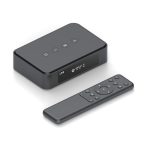
A professional wireless system is far more than just a microphone without a cable. It is an ecosystem of specialized components working in concert. At its heart are the transmitter and receiver. The transmitter, often a bodypack or a handheld mic itself, converts the audio signal and broadcasts it via radio waves. The receiver, typically a half or full rack-mount unit or a compact USB dongle, captures this broadcast and converts it back into a standard audio signal for your mixer, recorder, or computer. The choice between a bodypack with a lavalier mic (ideal for presenters and actors) and a wireless handheld (perfect for vocalists and hosts) is your first major decision, dictated by the application and the need for visibility.
Beyond the basic link, professional systems are defined by their feature sets. True diversity reception is non-negotiable; it uses two separate antennas and receiver circuits to constantly select the strongest signal, eliminating dropouts caused by multipath interference (when radio waves bounce off surfaces and cancel each other out). Advanced systems offer features like onboard recording as a backup in the transmitter, remote control and monitoring via smartphone apps, and robust encryption for sensitive projects. For instance, a documentary filmmaker might use a system with internal recording to capture a subject's audio directly on their bodypack, providing a safety track independent of the receiver.
Your investment should also consider power and infrastructure. High-quality rechargeable battery systems with smart chargers are essential for all-day reliability, replacing the waste and uncertainty of disposable batteries. Furthermore, antennas are not mere accessories; they are critical signal conduits. Proper antenna placement, using distribution systems to feed multiple receivers from a single set of strategically placed paddle antennas, is what separates a shaky setup from a rock-solid one. Think of your antennas as the foundation of your wireless house—without a solid foundation, everything else is unstable.
Navigating Frequency Spectrum and Licensing
The invisible highway your audio travels on is the radio frequency spectrum, and it is crowded. In 2026, understanding this landscape is paramount to a clean, interference-free signal. The two primary bands for professional wireless audio are the UHF (Ultra High Frequency) band and the 2.4 GHz ISM band. UHF systems (typically operating between 470-698 MHz, though this varies globally) have long been the professional standard due to their superior range, penetration through walls, and ability to support many simultaneous channels with careful coordination. However, these frequencies are subject to constant reallocation by governments to mobile broadband services, a process known as the "spectrum repack."
To combat this, modern UHF systems employ sophisticated frequency agility and coordination software. Before any shoot or event, you must scan the local RF environment using your receiver's built-in tool or dedicated software to identify "quiet" frequencies. You then group your wireless systems (mics, in-ear monitors) into coordinated "banks" where all frequencies are mathematically spaced to avoid intermodulation distortion—a form of interference the devices create with each other. For example, deploying ten wireless lavaliers for a corporate panel requires this coordination; simply tuning them to random open frequencies is a recipe for audible chaos.
For many users, license-free bands like 2.4 GHz (Wi-Fi territory) or 5.8 GHz offer a simpler alternative. These systems use advanced digital transmission protocols like AES-256 encryption and frequency-hopping spread spectrum to dodge interference. While convenient and globally usable, they can be more susceptible to congestion in dense urban environments packed with Wi-Fi routers. The professional takeaway is this: for mission-critical, high-channel-count applications in predictable environments, a professionally coordinated UHF system is king. For solo operators, podcasters, or small mobile teams, a high-end 2.4 GHz system offers incredible plug-and-play performance without the need for deep frequency management.
Latency, Compression, and Audio Fidelity
In the wired world, latency is negligible. In wireless, it is a crucial specification that can make or break a setup. Latency is the delay between the sound entering the microphone and emerging from the receiver. For monitoring scenarios, like a musician using wireless in-ear monitors, high latency (over 5-10ms) can be disorienting and make performance difficult. For video work, audio must remain in sync with picture; excessive latency will cause lip-sync issues in post-production. Modern professional digital wireless systems have achieved remarkably low latency, often under 3ms, making them imperceptible in most applications.
Audio fidelity is shaped by the system's analog-to-digital conversion and audio compression. All digital wireless systems use some form of data compression to fit the high-quality audio signal into the available RF bandwidth. The key is the use of "transparent" or "psychoacoustic" codecs that discard only audio data the human ear is least likely to perceive. Systems employing codecs like aptX, LHDC, or proprietary equivalents (e.g., Audio Ltd.'s A-Link, Shure's Audio Reference Companding) deliver full-bandwidth, 24-bit audio that is indistinguishable from a wired connection in a real-world listening test. Avoid systems that use aggressive, lossy compression, which can introduce artifacts, reduce dynamic range, and make the audio sound thin or "digital."
When evaluating systems, always listen critically. Reputable manufacturers provide detailed specs for frequency response, dynamic range (aim for >120dB), and total harmonic distortion. However, specs only tell part of the story. Practical advice: rent or demo a system before purchasing. Record a vocalist with both a wired and wireless version of the same microphone model into your DAW. Zoom in on the waveforms and listen on high-quality headphones. Can you hear a difference in clarity, low-end response, or noise floor? If not, the wireless system has passed the professional fidelity test.
Integration into Professional Workflows
A wireless system does not exist in a vacuum; it must integrate flawlessly into your existing production chain. For studio podcasters and streamers, this often means a USB or Dante-enabled receiver that connects directly to a computer without an audio interface. These receivers appear as selectable audio devices in software like OBS, Riverside, or your DAW. The advantage is simplicity and a clean desk. For example, a streamer can use a professional wireless handheld mic with a USB receiver, gaining broadcast-quality audio and the freedom to move around their space without investing in a full mixer setup.
For live sound and broadcast, integration involves analog or digital outputs into a mixing console. Here, features like remote gain control from the console (via protocols like HiQnet or AES67) are invaluable, allowing an audio engineer to adjust transmitter levels from FOH without running to the stage. Timecode integration is critical for film and television. High-end wireless systems can embed timecode from your camera or sound recorder directly into the audio transmission, ensuring perfect sync in post-production, even if the receiver is disconnected and reconnected throughout the day.
The most advanced integration is through networked audio protocols like Dante or AES67. A Dante-enabled wireless receiver becomes a node on your audio network, streaming multiple channels of high-quality, low-latency audio over a standard Ethernet cable to any destination on the network—a console, a recorder, a streaming PC. This eliminates a massive amount of point-to-point wiring. In a corporate conference setup, you could have a rack of wireless receivers backstage, with all 32 channels of audio flowing via a single Ethernet cable to the front-of-house mix position and a separate recording rig simultaneously.
Future-Proofing and Strategic Investment
The professional audio market moves quickly. Investing in wireless gear requires a strategy that protects your investment against technological and regulatory obsolescence. The first rule is to avoid "bargain" consumer-grade gear for professional work. Its unreliability will cost you more in failed recordings or live events than you saved upfront. Instead, invest in systems from established pro-audio manufacturers with a track record of firmware updates and long-term support. These companies actively work to keep their products viable through spectrum changes via software updates that redefine operable frequency ranges.
Modularity is a key future-proofing concept. Consider systems with interchangeable frequency bands. Some high-end receivers allow you to swap out the entire RF module. If a new block of frequencies becomes available or a old one is repurposed, you may only need to purchase new modules or transmitter capsules, not entirely new systems. Furthermore, prioritize systems that support software-based control and monitoring. The ability to use an iPad to scan frequencies, adjust gains, and monitor battery levels on all your transmitters from across a venue is not just a convenience; it's a workflow revolution that extends the functionality of your gear.
Finally, build your kit with scalability in mind. Start with a core system that meets your most frequent need—perhaps a dual-channel receiver and two lavalier transmitters. Ensure the ecosystem you choose allows you to add more channels, different transmitter types (handheld, plug-on), and in-ear monitoring seamlessly. Your wireless setup should grow organically with your business. By choosing an interoperable ecosystem, you ensure that all your components work together under a unified control platform, reducing complexity and training time as you expand.
Key Takeaways
- ✓ A professional wireless system is an integrated ecosystem of transmitters, receivers, antennas, and power solutions, where true diversity reception and proper antenna placement are critical for reliability.
- ✓ Success depends on actively managing the RF spectrum through scanning and coordination, choosing between flexible but regulated UHF systems and globally simpler but potentially congested 2.4/5.8 GHz solutions.
- ✓ Audio fidelity hinges on low-latency digital transmission and high-quality, psychoacoustic audio codecs; always conduct real-world listening tests to compare wireless audio to a wired benchmark.
- ✓ Seamless integration into workflows is achieved through connectivity options like USB, Dante, and timecode, transforming wireless from a standalone tool into a networked component of your production.
- ✓ Future-proof your investment by choosing modular, software-updatable systems from reputable manufacturers and building a scalable kit within a single, interoperable product ecosystem.
Frequently Asked Questions
Is wireless audio quality as good as wired in 2026?
For professional-grade systems, yes, absolutely. High-end digital wireless systems using advanced, transparent codecs and 24-bit conversion deliver audio that is audibly indistinguishable from a wired connection in blind tests. The key differentiators are no longer quality, but reliability, latency, and feature set.
How many wireless microphones can I use at once without interference?
The number depends on the frequency band and coordination. In a well-coordinated UHF system, you can reliably run 30, 40, or even more channels simultaneously in a single location. In the 2.4 GHz band, practical limits are lower, often 4-8 channels, due to the crowded nature of the band. Always use coordination software to group your devices.
What is the typical battery life for a wireless transmitter?
With modern high-capacity rechargeable batteries, you can expect 6-12 hours of continuous operation from a professional bodypack transmitter. Handheld transmitters often have longer life due to larger battery compartments. Implementing a disciplined charging routine with smart chargers is essential for all-day production reliability.
Do I need a license to operate professional wireless microphones?
It depends on your country and the frequency band. In many regions, certain UHF frequencies require a license for commercial use, while others are license-free. The 2.4 GHz and 5.8 GHz bands are generally license-free globally. Always check the regulations with your national communications authority (e.g., FCC in the USA, Ofcom in the UK).
Can I use wireless audio for recording dialogue on a film set?
Yes, wireless is standard practice on film sets for capturing dialogue, especially for wide shots or scenes with complex movement. The critical additions are systems with ultra-low noise preamps for quiet dialogue, internal backup recording in the transmitter (like a "digital leash"), and timecode synchronization to ensure perfect audio-video sync in post-production.
Conclusion
Building a professional wireless audio setup in 2026 is an exercise in balancing technical knowledge with practical workflow needs. We have moved from an era of compromise to one of capability, where wireless systems offer not just convenience, but enhanced creative and operational potential. By understanding the core components, mastering frequency management, demanding true broadcast-quality audio, and integrating wireless thoughtfully into your production chain, you can cut the cord without cutting corners. This approach allows you to capture pristine audio anywhere your project takes you, from the controlled studio to the unpredictable real world.
The next step is to audit your current needs. Identify the single most constraining cable in your workflow. Is it your podcast host's mic? Your filmmaker's lavalier? Start there. Research, demo gear from trusted brands, and invest in a foundational system that you can build upon. Embrace the freedom that modern wireless technology provides, and let it empower you to create with fewer limitations and greater focus on the content itself. The future of audio is untethered, and it sounds exceptional.

Emily Reynolds is a U.S.-based electronics expert with over 8 years of experience reviewing and analyzing consumer electronics and smart devices. She specializes in gadgets, home electronics, and emerging tech designed to improve everyday life. Emily’s reviews focus on real-world performance, usability, and long-term reliability, helping readers understand complex technology and choose electronics that truly fit their needs.