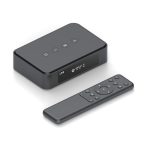
Imagine cutting the cord on your favorite speakers, streaming music from your phone to any room in the house without a single Bluetooth pairing pop-up, or creating a custom wireless link for a projector—all with components you can hold in your hand. This is the promise and satisfaction of building your own wireless audio system from the ground up. Far from being magic, wireless audio is accessible physics and electronics, a perfect project for the curious maker in 2026.
This topic matters because in an era of sealed devices and proprietary ecosystems, understanding and building the technology we use daily reclaims a sense of ownership and customization. You will learn the fundamental principles behind wireless audio transmission, the key components that make it work, and follow a practical, step-by-step guide to assemble both a simple FM transmitter and a superheterodyne receiver. This journey demystifies wireless technology, empowers you to troubleshoot and modify your gear, and opens the door to a deeper understanding of the invisible signals that surround us.
Understanding the Core Principles: It's Not Magic, It's Modulation
At its heart, wireless audio is about converting sound—an electrical signal—into a radio wave that can travel through the air, and then converting it back again. This process is called modulation and demodulation. For our DIY purposes, Frequency Modulation (FM) is a robust and relatively straightforward method. In FM, the frequency of a carrier radio wave is varied in proportion to the amplitude (loudness) of the audio signal. A louder input signal causes a greater shift in the carrier frequency. This method is resistant to amplitude noise (like static from power lines), which makes it ideal for clear audio transmission over short distances.
The two essential units you will build are the transmitter and the receiver. The transmitter takes an audio input (from a phone's headphone jack, a computer, or a microphone), processes it, and uses it to modulate an oscillator circuit that generates the radio frequency (RF) carrier wave. This RF signal is then sent out via an antenna. The receiver performs the reverse operation: its antenna picks up various RF signals, a tuner circuit selects the specific frequency your transmitter is using, a demodulator extracts the original audio signal from the carrier wave, and an amplifier boosts it to drive a speaker or headphones.
It's crucial to understand legal and safety considerations. In most regions, low-power transmission on certain "experimental" or "hobbyist" bands (like the common 88-108 MHz FM broadcast band for very low power) is permissible, but you must ensure your device does not cause interference with licensed services. Always keep transmission power minimal (under 100 microwatts is a good rule of thumb for starters) and transmission range short (within your own property). Never attempt to modify your device to increase its power significantly without understanding the licensing requirements.
Gathering Your Arsenal: Essential Components and Tools for 2026
To embark on this build, you'll need a mix of classic electronic components and modern conveniences. For a basic FM transmitter, the core includes a transistor (like the 2N3904 or a high-frequency BF199), resistors, capacitors, a coil (which you can wind yourself), a condenser microphone or an audio jack for input, a 9V battery for power, and a short piece of wire for the antenna. For the matching receiver, building a full kit from a superheterodyne receiver IC like the CD9088 or TEA5767 is the most reliable path for beginners. These integrated circuits contain most of the complex circuitry in one chip, requiring only external components for tuning, filtering, and audio output.
Your toolkit is equally important. A good soldering iron with a fine tip, lead-free solder, a breadboard for prototyping, wire cutters/strippers, and a multimeter are non-negotiable. In 2026, a handheld oscilloscope or a USB logic analyzer that connects to your smartphone has become an affordable and invaluable tool for visualizing signals and debugging your circuit. You'll also need basic materials: a perforated circuit board (protoboard), hook-up wire, and enclosures (small plastic or project boxes) to house your finished devices.
Sourcing components has never been easier. While local electronics shops are rare, online retailers like Digi-Key, Mouser, and Adafruit ship worldwide. For a first project, consider purchasing a pre-bundled kit for the receiver. This guarantees you have all the correct component values. For the transmitter, sourcing individual parts allows for more experimentation and learning. Always download and have the datasheet for any active component (transistors, ICs) on hand; it is your roadmap to understanding how the component functions and how it should be connected.
Step-by-Step: Building a Simple FM Transmitter
We'll construct a classic one-transistor FM transmitter. First, prototype the circuit on a breadboard. This allows you to test and adjust without soldering. The core layout involves connecting the transistor in a common-emitter oscillator configuration. The frequency of oscillation is determined by an LC tank circuit—a coil (L) and a capacitor (C) in parallel. Wind your coil using 22-gauge enameled copper wire around a 5mm diameter object (like a pen) for 6-8 turns. This coil, in conjunction with a trimmer capacitor, will allow you to tune the transmitter across a portion of the FM band.
Connect your audio source. If using a microphone, it will connect directly to the base of the transistor through a coupling capacitor. If using a line-level input (like from a phone), you will need a potentiometer as a volume control to attenuate the stronger signal before it enters the modulation stage. The modulated signal from the collector of the transistor is fed to a short antenna—a 30cm (12-inch) piece of wire is sufficient for very short range. Power the circuit with a 9V battery, ensuring correct polarity.
Testing and tuning are critical. Power on the circuit and use a portable FM radio. Place the radio a few feet away from your transmitter. Slowly the radio dial across the FM band (88-108 MHz) while speaking into the microphone or playing music from your audio source. should hear your audio on a quiet spot on the dial. Use a non-metallic screwdriver to carefully adjust the trimmer capacitor to move the transmission to your desired frequency, ideally one with no existing broadcast station. Once tuned, you can carefully transfer the breadboard circuit to a protoboard for a permanent build.
Constructing the Companion: A Superheterodyne FM Receiver
While you could build a simple "crystal radio" style receiver, a superheterodyne receiver offers far better selectivity (the ability to pick one station among many) and sensitivity. In 2026, this is best achieved using a dedicated IC. The process involves building the supporting circuit around the chip as specified in its datasheet or kit instructions. This typically includes providing power, connecting a variable capacitor or potentiometer for tuning, attaching a ferrite rod antenna for receiving signals, and adding a few external capacitors and resistors for filtering.
The tuning circuit, often involving the ferrite rod antenna coil and a variable capacitor, selects the desired frequency from the air. The IC then internally mixes this signal with a signal from a local oscillator to create an intermediate frequency (IF), which is amplified and filtered before demodulation. The extracted audio signal is then output from a specific pin on the IC. This audio output is too weak to drive a speaker directly, so it must be fed into an audio amplifier stage.
For the amplifier, you can use a simple LM386-based amplifier module, ubiquitous and easy to use. Connect the audio output from your receiver IC to the input of the LM386 module. The module's output will then connect to a small 8-ohm speaker. Power both the receiver IC and the amplifier module with the same power source, typically a 5-9V battery pack. Once assembled, power on the system and slowly tune the variable capacitor. You should be able to pick up local FM broadcasts and, if your transmitter is on and nearby, your own transmitted audio signal.
Troubleshooting, Optimization, and Next-Level Projects
If your system isn't working, methodical troubleshooting is key. For the transmitter: First, use your multimeter to check for continuity and correct voltages. Ensure the battery is fresh. Verify all solder joints are solid and not bridged. If the radio picks up only a hum or silence, the oscillator may not be running; double-check the coil connections and transistor orientation. For the receiver: Ensure the IC is receiving correct voltage. Check the audio amplifier separately by touching its input with your finger; you should hear a 60Hz hum from the speaker, confirming the amp works.
To optimize performance, focus on the antennas. For the transmitter, a longer, straight vertical antenna can increase range, but keep it legal and safe. For the receiver, carefully rotating the ferrite rod antenna can dramatically improve signal strength. Shielding sensitive parts of the circuit (like the oscillator coil) with small aluminum foil enclosures grounded to the circuit can prevent unwanted radiation and stabilize frequency. Always keep transmitter and receiver power supplies separate and use decoupling capacitors (a 0.1µF ceramic capacitor close to the IC power pins) to reduce noise.
Once your basic system is operational, the world of DIY audio opens up. You can experiment with stereo transmission by building a circuit that generates a composite stereo signal. Explore digital audio transmission using low-cost ESP32 microcontrollers and Wi-Fi or Bluetooth protocols, programming your own simple streaming network. You could also integrate your system into smart home setups, creating a whole-house audio system with multiple receivers tuned to a single, low-power transmitter. The foundational knowledge from this analog build will make these advanced digital projects much more comprehensible.
Key Takeaways
- ✓ Wireless audio relies on modulating an audio signal onto a radio frequency carrier wave (like FM) for transmission and demodulating it at the receiver.
- ✓ A successful DIY build requires understanding core components: oscillators, amplifiers, antennas, and, for reliable reception, superheterodyne receiver ICs.
- ✓ Always prioritize safety and legality by keeping transmission power very low and ensuring your device does not interfere with licensed radio services.
- ✓ Prototyping on a breadboard and methodical troubleshooting with tools like a multimeter are essential steps before creating a permanent soldered circuit.
- ✓ This foundational project opens the door to more advanced DIY audio ventures, including stereo FM, digital streaming, and custom whole-house audio systems.
Frequently Asked Questions
Is it legal to build and use a homemade FM transmitter?
It is legal in many countries provided you operate under "Part 15" (in the US) or similar low-power, non-interference regulations. This typically means your signal must not be detectable beyond 100-200 feet and must not cause any interference to licensed radio services. Using it solely within your own home is generally acceptable. Always check your local national communications authority's rules.
What is the maximum range I can expect from my DIY transmitter?
With the simple circuit described and a short antenna, expect a reliable range of 30 to 100 feet indoors, through a few walls. Range is affected by transmitter power (which we keep very low), antenna efficiency, and environmental obstacles. Do not attempt to increase range with amplifiers without understanding the legal power limits, which are very strict.
Can I transmit in stereo with a DIY transmitter?
Yes, but it is significantly more complex. A stereo FM signal requires generating a 38kHz subcarrier and multiplexing left and right audio channels. Dedicated ICs like the BA1404 are designed for this purpose and can be used as the heart of a stereo FM transmitter project, following a more advanced circuit diagram.
Why use a superheterodyne receiver instead of a simpler design?
Simpler "tuned radio frequency" (TRF) receivers are easier to build but suffer from poor selectivity and sensitivity. The superheterodyne design, which converts all incoming signals to a fixed Intermediate Frequency (IF) for amplification and filtering, offers vastly better performance—it can pick out a weak desired station from between two strong ones, which is crucial for clear reception.
My transmitter works but the audio sounds distorted. How can I fix this?
Distortion often comes from over-modulation. The audio input signal is too strong, causing excessive frequency deviation. Reduce the input level using a potentiometer as a volume control before the modulation stage. Also, ensure your power supply is stable and adequately filtered; a dying battery can cause distortion and frequency drift.
Conclusion
Building your own wireless audio transmitter and receiver is a profoundly educational project that bridges theoretical electronics with tangible, functional results. You've journeyed from understanding the principle of modulation, through gathering components and tools, to the hands-on construction and tuning of both transmission and reception units. This process demystifies the technology that powers our daily wireless interactions and provides a solid foundation in circuit building, troubleshooting, and RF principles.
The skills you've developed here are a launchpad. With your working system as a proof of concept, you are now equipped to modify, improve, and expand. Consider encasing your projects in custom enclosures, adding visual signal strength meters, or diving into the world of digital audio with microcontroller-based solutions. ultimate goal is not just a pair of devices, but the empowered knowledge that you can build, understand, and control the technology around you. So power up your creation, tune in, and listen to the sound of your own ingenuity.

Emily Reynolds is a U.S.-based electronics expert with over 8 years of experience reviewing and analyzing consumer electronics and smart devices. She specializes in gadgets, home electronics, and emerging tech designed to improve everyday life. Emily’s reviews focus on real-world performance, usability, and long-term reliability, helping readers understand complex technology and choose electronics that truly fit their needs.