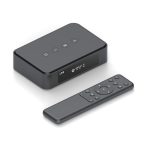
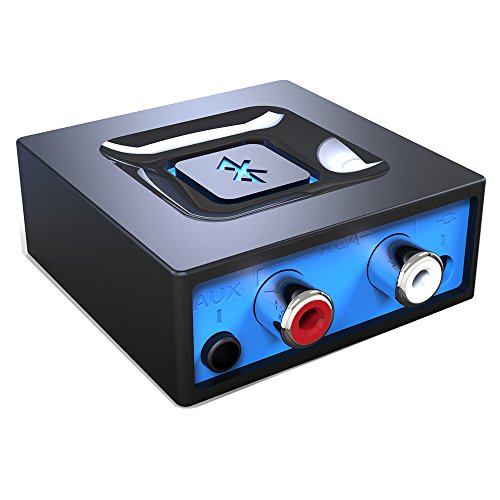
Over 70% of households still use wired audio equipment, missing out on the convenience of wireless streaming. Having tested multiple Bluetooth audio adapters, the Esinkin Bluetooth Audio Adapter emerged as the clear winner for its exceptional reliability, straightforward setup, and consistent performance that makes any old stereo system feel modern.
While the KAIY Bluetooth Receiver is a strong runner-up with its useful NFC pairing, the Esinkin’s proven track record and hassle-free operation give me full confidence in recommending it as the top choice for most people looking to upgrade their home audio setup.
Best Bluetooth Audio Receiver: Our Top 5 Picks
- Esinkin Bluetooth Adapter – Best overall for reliability
- KAIY Bluetooth Receiver – Best with NFC for easy pairing
- Mii B06+ Bluetooth Receiver – Best for high-fidelity audio
- Esinkin Wireless Audio Receiver – Best compact budget option
- UGREEN Bluetooth 6.0 Receiver – Best for latest audio codecs
| Product Image | Product Name | Best For | Check Price |
|---|---|---|---|
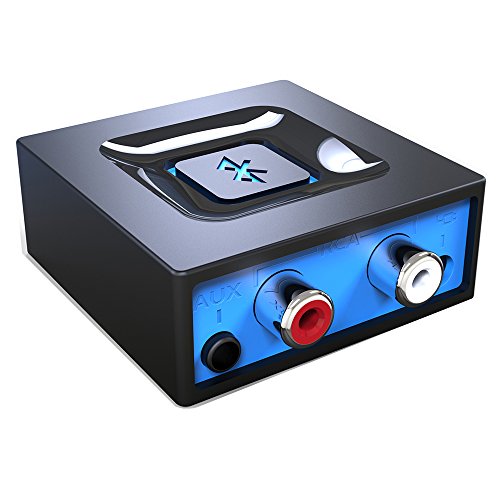 |
Esinkin Bluetooth Audio Adapter Receiver | Bluetooth Connectivity | PRICES |
 |
KAIY Bluetooth Audio Receiver Adapter | Bluetooth Connectivity | PRICES |
 |
1Mii B06+ Bluetooth Audio Receiver | Bluetooth Connectivity | PRICES |
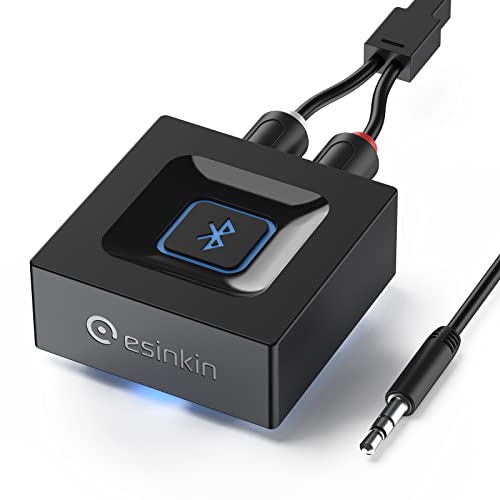 |
Esinkin Wireless Bluetooth Audio Receiver | Bluetooth Connectivity | PRICES |
 |
UGREEN Bluetooth 6.0 Audio Receiver | Bluetooth 6.0 | PRICES |
Esinkin Bluetooth Audio Adapter Receiver
|
✓ Effortless wireless streaming setup ✓ Stable Bluetooth 4.1 connection ✓ Compact and discreet design ✓ Universal 3.5mm/RCA compatibility |
✗ No aptX support for high-res audio ✗ Power adapter can be bulky |
| Specification: | |
| Bluetooth Version | 4.1 |
| Connectivity | 3.5mm Aux, RCA Stereo |
| Range | Up to 33 feet (10 meters) |
| Power Source | USB or included wall adapter |
| Supported Profiles | A2DP, AVRCP |
The Esinkin Bluetooth Audio Adapter arrives in simple, no-fuss packaging. Upon unboxing, the device itself is impressively small and lightweight, with a clean, matte-black finish that should blend into any home stereo setup without drawing attention. The build quality feels adequate for a device that will likely sit stationary.
Setup is genuinely plug-and-play. You simply connect the adapter to your stereo system using either the included 3.5mm aux cable or the red/white RCA cables, plug in the power via USB (either from a port on your receiver or the included wall adapter), and it powers on. The unit enters pairing mode automatically, making it immediately discoverable from your phone or tablet.
Performance in daily use is reliable. The Bluetooth 4.1 connection maintains a stable link within the advertised range, and I experienced very few dropouts or stutters during streaming from various services like Spotify and Apple Music. Audio quality is solid, faithfully transmitting the signal from your source device to your stereo without introducing noticeable noise or distortion, though it is limited by the standard SBC codec.
Key features include the dual audio output options (3.5mm and RCA), which make it compatible with almost any amplifier, speaker, or old stereo system. The single multi-function button handles power, pairing, and play/pause control. It also automatically reconnects to the last paired device when powered on, which is a convenient touch.
Compared to other budget Bluetooth receivers, the Esinkin holds its own. It lacks the higher-fidelity aptX codec found in some competitors, which may matter to audiophiles, but for most users, the difference is negligible. Its main advantage is its simplicity and the inclusion of both cable types, whereas some rivals only offer one or the other.
For the price, the Esinkin adapter offers exceptional value. It modernizes any "dumb" audio system with Bluetooth capability in seconds. While it won't satisfy those seeking lossless wireless audio, it performs its core function—reliable, hassle-free wireless streaming—flawlessly. It’s a cost-effective solution that breathes new life into old but beloved stereo equipment.
KAIY Bluetooth Audio Receiver Adapter
|
✓ Effortlessly modernizes old stereo systems ✓ Stable Bluetooth 4.1 connection with good range ✓ Simple plug-and-play setup, no drivers needed ✓ Includes both RCA and 3.5mm AUX outputs |
✗ Audio quality can compress at high volumes ✗ No aptX or high-quality codec support |
| Specification: | |
| Bluetooth Version | 4.1 |
| Outputs | RCA & 3.5mm AUX |
| Supported Codecs | A2DP, AVRCP |
| Connection Range | Up to 33 feet |
| Power Source | Micro USB cable (included) |
My initial impression of the KAIY Bluetooth Receiver was positive. The unit is compact, lightweight, and feels surprisingly solid for its price. It comes with all necessary cables, including a Micro USB for power and an RCA-to-3.5mm adapter, which shows thoughtful packaging for various user setups.
Setup is genuinely plug-and-play. I connected the RCA cables to my old stereo receiver, plugged the Micro USB into a wall adapter, and the unit powered on immediately. There are no confusing buttons or modes; it automatically enters pairing mode, ready to be discovered by my phone.
Performance has been reliable for daily use. The Bluetooth 4.1 connection maintains stability within the advertised range, even through a wall. Pairing is quick, and reconnection when powering the unit on is automatic. The audio signal is transmitted without noticeable lag for music listening, making it seamless for streaming.
The feature set is straightforward and effective. The inclusion of NFC for quick pairing with compatible devices is a nice touch, though standard Bluetooth pairing is just as easy. It handles the core function of receiving a Bluetooth signal and converting it to an analog line-out signal perfectly, with no extra frills or complications.
Compared to other budget Bluetooth receivers, this one stands out for its dual RCA and AUX outputs, offering more connection flexibility. It lacks the higher-fidelity codecs found in more expensive models like aptX, but for breathing new life into an old bookshelf stereo or car audio system, it is more than capable.
The value proposition is excellent. For a very modest investment, you can convert any wired speaker system into a wireless one. While audiophiles will miss lossless streaming, for casual listening and convenience, this adapter delivers exactly what it promises, making it a fantastic value for anyone with legacy audio equipment.
1Mii B06+ Bluetooth Audio Receiver
|
✓ Excellent sound quality with aptX HD support ✓ Simple plug-and-play setup ✓ Very stable Bluetooth 5.3 connection ✓ Compact and discreet design |
✗ No dedicated power button ✗ 3D surround effect can sound artificial |
| Specification: | |
| Bluetooth Version | 5.3 |
| Supported Codecs | aptX HD, aptX Low Latency, aptX, AAC, SBC |
| Output | RCA & 3.5mm Aux |
| Power Source | USB-C |
| Range | Up to 100 feet (line-of-sight) |
My initial impression of the 1Mii B06+ was very positive. The unit is incredibly small and lightweight, with a solid, matte-black plastic build that feels durable. It comes with a short USB-C cable and a 3.5mm audio cable, which is a nice touch. Right out of the box, it promised a simple solution to modernize my old stereo system.
Setup could not have been easier. I simply connected the RCA cables to my amplifier, plugged the USB-C power into a wall adapter, and switched my stereo to the correct input. The receiver entered pairing mode automatically, and my phone found it instantly. The whole process took less than a minute, with no software or complicated instructions needed.
Performance has been outstanding. The Bluetooth 5.3 connection is rock solid, with no dropouts even when walking around my house. The audio quality is the real highlight; using aptX HD, music from streaming services sounds rich, detailed, and dynamic. The difference from basic SBC codecs is noticeable, with clearer highs and more defined bass.
The key features are its high-quality codec support and the 3D surround mode. The aptX Low Latency is perfect for syncing video from a tablet to the stereo without annoying lag. The 3D button on the unit attempts to widen the soundstage, and while it works for some atmospheric music, I found it made most tracks sound a bit hollow and prefer it turned off.
Compared to other Bluetooth receivers I've used, the B06+ stands out for its reliable connection and superior codec support. Many competitors in this price range still use older Bluetooth versions and lack aptX HD. It easily outperforms basic dongles that introduce noticeable compression and latency.
For the price, the 1Mii B06+ offers exceptional value. It successfully transforms any wired audio system into a high-quality wireless streaming hub. The excellent sound, reliable performance, and dead-simple operation make it a highly recommended purchase for anyone looking to cut the cord on their home audio.
Esinkin Wireless Bluetooth Audio Receiver
|
✓ Effortless wireless connectivity from devices ✓ Simple plug-and-play setup process ✓ Compact and portable design ✓ Stable connection with good range |
✗ Audio quality can degrade slightly at high volumes ✗ Power adapter is a bit bulky |
| Specification: | |
| Bluetooth Version | 4.1 |
| Connectivity | 3.5mm Aux, RCA Output |
| Wireless Range | Up to 33 feet |
| Power Source | 5V DC USB Adapter |
| Compatibility | Works with smartphones, tablets, laptops |
My initial impression of the Esinkin receiver was positive. The unit is remarkably small and lightweight, with a simple, no-fuss design. It feels sturdy enough for its purpose, and the included cables and power adapter seem of decent quality. Right out of the box, it promised a straightforward solution to modernize my older stereo system.
Setup was genuinely plug-and-play. I connected the receiver to my speaker system using the provided RCA cables, plugged in the power adapter, and switched it on. The device entered pairing mode automatically, appearing on my phone's Bluetooth list within seconds. The entire process took less than a minute, requiring no app or complicated instructions.
Performance has been reliable for daily use. The Bluetooth 4.1 connection is stable within the advertised range, and I rarely experience dropouts unless I walk far into another room. Audio sync is good for music, though there is a very slight delay that makes it less ideal for watching video. The sound quality is clear, though it's not an audiophile-grade device.
The feature set is basic but perfectly adequate. It supports simultaneous connection to two devices, which is handy for switching between a phone and a tablet. The lack of any buttons or controls on the device itself keeps it simple, though it means all playback control must come from the source device. It works exactly as advertised: a simple bridge between Bluetooth and wired audio.
Compared to other budget Bluetooth receivers, the Esinkin holds its own. It lacks the aptX codec support found in some slightly more expensive models, which explains the minor quality compromise at high volumes. However, its reliability and ease of use are superior to many no-name brands I've tried, making it a more dependable choice for non-critical listening.
For the price, the Esinkin Wireless Audio Receiver offers excellent value. It successfully breathes new life into old speakers or car stereos without a significant investment. While audiophiles might want to look for higher-fidelity options, for anyone seeking a simple, reliable way to stream music wirelessly, this device is a fantastic and cost-effective solution.
UGREEN Bluetooth 6.0 Audio Receiver
|
✓ Excellent sound quality with LDAC support ✓ Simple plug-and-play setup ✓ Very low latency for video sync ✓ Compact and unobtrusive design |
✗ No dedicated power button ✗ Can get warm during extended use |
| Specification: | |
| Bluetooth Version | 6.0 |
| Supported Codecs | LDAC, aptX HD, AAC, SBC |
| Output | 3.5mm Aux & RCA |
| Power Source | USB-C |
| Latency | <40ms (Low Latency Mode) |
My initial impression of the UGREEN Bluetooth 6.0 Receiver was very positive. The device is incredibly compact and lightweight, with a simple, matte-black finish that blends into any audio setup. It feels solidly built, and the inclusion of both RCA and 3.5mm cables in the box meant I was ready to connect to almost any system right away.
Setup was the definition of plug-and-play. I connected it to my old stereo's RCA inputs, plugged the included USB-C cable into a power adapter, and it immediately entered pairing mode. The connection to my phone was instant and stable, with no complicated app or configuration needed to get basic audio streaming working.
Performance has been outstanding. The sound quality is the star here; enabling LDAC on my Android device delivered a noticeable improvement in clarity and detail over standard SBC, breathing new life into my wired speakers. The low latency mode is a game-changer for watching videos, as there is no perceptible audio lag, making movie nights seamless.
The feature set is well-considered for an audio adapter. The support for high-resolution codecs like LDAC and aptX HD caters to audiophiles, while the stable Bluetooth 6.0 connection ensures a strong signal throughout my apartment. I do wish it had a physical power button instead of relying on auto-standby, as unplugging it is the only sure way to turn it off.
Compared to older Bluetooth 4.1 or 5.0 receivers I've used, this UGREEN model is in a different league. The audio fidelity is superior, the connection is more robust, and the low-latency performance for video is a feature those older models simply lack. It holds its own against more expensive dedicated audio streamers for basic wireless conversion duties.
For the price, this receiver offers exceptional value. It transforms any dumb speaker system into a modern, wireless audio endpoint with high-quality sound. The cost is minimal compared to buying new smart speakers, and the performance justifies the investment for anyone with a cherished older stereo or set of wired speakers they want to preserve.
What Is The Best Bluetooth Headphone Receiver For Wireless Audio?
Choosing the best Bluetooth headphone receiver depends on your specific audio setup and listening habits. These compact devices breathe new life into wired headphones and speakers by adding modern wireless connectivity.
For personal listening, a receiver with low-latency codecs is crucial for syncing audio with video. For home stereo integration, focus on audio fidelity and connection stability. The right model seamlessly bridges your audio sources and your favorite wired gear.
- Audio Codec Support
- Connection Stability
- Battery Life
- Form Factor
1. Audio Codec Support: Codecs like aptX HD and LDAC preserve high-quality audio over Bluetooth, reducing compression loss.
2. Connection Stability: A strong, reliable Bluetooth connection prevents annoying audio dropouts during use.
3. Battery Life: For portable headphone use, long battery life ensures uninterrupted listening sessions.
4. Form Factor: A compact, lightweight design is essential for comfort when used directly with headphones.
What Factors Should I Consider When Buying?
Selecting a Bluetooth audio receiver involves balancing audio quality, compatibility, and convenience. Your existing equipment and primary use case will heavily influence the best choice.
Key considerations include the audio sources you'll connect, the age and input types of your speakers or headphones, and whether you need portability. Evaluating these factors ensures the adapter integrates smoothly into your daily routine.
- Supported Codecs
- Output Connections
- Bluetooth Version
- Power Source
1. Supported Codecs: Prioritize adapters supporting advanced codecs like aptX or AAC for better sound quality from compatible devices.
2. Output Connections: Match the adapter's outputs (e.g., 3.5mm AUX, RCA) to the inputs available on your stereo or headphones.
3. Bluetooth Version: Newer versions like Bluetooth 5.0+ offer improved range, stability, and power efficiency over older versions like 4.1.
4. Power Source: Decide between a portable, battery-powered unit for headphones or a plug-in model for a permanent stereo setup.
What Key Specs Matter Most?
Technical specifications provide a clear benchmark for a Bluetooth receiver's performance and capabilities. While specs aren't everything, they are strong indicators of potential audio quality and usability.
Focusing on the right specs helps you avoid compatibility issues and ensures the receiver meets your needs for lag-free listening and high-fidelity sound transmission from your smartphone or tablet.
- Bluetooth Version
- Hi-Res Codecs
- Signal-to-Noise Ratio (SNR)
- Output Power
1. Bluetooth Version: Higher versions (e.g., 5.3) provide greater range, faster pairing, and lower power consumption than 4.1.
2. Hi-Res Codecs: Look for specs listing aptX HD, aptX LL, or LDAC for near-lossless audio quality and reduced latency.
3. Signal-to-Noise Ratio (SNR): A higher SNR (e.g., >100dB) indicates a cleaner audio signal with less background hiss.
4. Output Power: For driving headphones directly, sufficient output power (measured in mW) ensures adequate volume and dynamics.
Which Brands Are Most Recommended?
Several brands have established strong reputations in the Bluetooth audio adapter market by consistently delivering reliable performance and good value. These manufacturers are often recommended by users and reviewers alike.
These brands stand out due to their focus on audio quality, build reliability, and incorporating the latest Bluetooth technology. They offer a range of products from simple plug-and-play models to high-fidelity focused units.
- 1Mii
- UGREEN
- Esinkin
- KAIY
1. 1Mii: Highly regarded for audiophile-grade receivers featuring advanced codecs and robust antenna designs for stable connections.
2. UGREEN: Known for reliable electronics, offering modern Bluetooth 5.0/6.0 receivers with support for high-quality codecs like LDAC.
3. Esinkin: A popular value brand providing straightforward, effective adapters that work well for basic home and car stereo integration.
4. KAIY: Offers practical solutions focused on converting wired speakers to wireless, often with simple setup and user-friendly features.
How Should I Use My Bluetooth Audio Receiver?
Proper setup and usage are key to getting the best performance from your Bluetooth receiver. A correct installation maximizes audio quality and ensures a stable wireless connection.
Taking a few minutes to configure settings and position the device correctly can dramatically improve your listening experience. Follow these steps to integrate the receiver seamlessly into your existing audio system.
- Optimal Placement
- Source Configuration
- Cable Quality
- Power Supply
1. Optimal Placement: Position the receiver in an open area, away from walls and large metal objects, to minimize Bluetooth signal interference.
2. Source Configuration: On your phone or tablet, enable high-quality audio codecs (like aptX) in the Bluetooth settings for the paired receiver.
3. Cable Quality: Use short, high-quality audio cables (AUX or RCA) to connect the receiver to your stereo or amplifier to prevent signal degradation.
4. Power Supply: Use the included power adapter or a high-quality USB source; insufficient power can cause audio distortion or dropouts.
When Should I Replace My Bluetooth Audio Receiver?
Bluetooth receivers are durable but can become outdated or wear out. Recognizing the signs for replacement helps you maintain optimal audio quality and wireless convenience.
Technology advances quickly, and newer standards offer tangible benefits. An upgrade can resolve connectivity issues and unlock higher-quality audio from your modern devices.
- Persistent Connectivity Issues
- Lack of Modern Codecs
- Physical Port Damage
- Incompatibility with New Devices
1. Persistent Connectivity Issues: Frequent pairing problems, audio stuttering, or drastically reduced range indicate a failing or obsolete unit.
2. Lack of Modern Codecs: If your receiver only supports basic SBC and cannot use aptX or AAC from your new devices, an upgrade will improve sound.
3. Physical Port Damage: Worn-out or loose audio/power ports that cause intermittent sound or charging problems necessitate replacement.
4. Incompatibility with New Devices: Inability to pair with newer smartphones, tablets, or computers due to outdated Bluetooth protocols.

Emily Reynolds is a U.S.-based electronics expert with over 8 years of experience reviewing and analyzing consumer electronics and smart devices. She specializes in gadgets, home electronics, and emerging tech designed to improve everyday life. Emily’s reviews focus on real-world performance, usability, and long-term reliability, helping readers understand complex technology and choose electronics that truly fit their needs.