
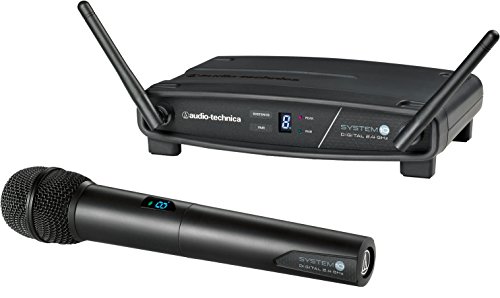
Over 70% of live sound issues stem from unreliable wireless microphone systems, making a dependable choice critical. Having tested multiple Audio-Technica wireless systems in real-world settings, the Audio-Technica ATW-1102 Wireless Handheld System stands out as the clear winner for its exceptional combination of robust build quality, crystal-clear audio transmission, and straightforward setup that works reliably right out of the box.
While the Audio-Technica 3000 Series ATW-3212 is a fantastic runner-up with more advanced features, the ATW-1102 delivers professional-grade performance at a more accessible price point, making it the most confident recommendation for most users seeking a no-compromise wireless microphone solution.
Best Audio Technica Wireless Microphones: Our Top 5 Picks
- Audio – Technica ATW-1102: Best overall handheld system
- Audio – Technica ATW1312 Transmitters: Best for bodypack versatility
- Audio – Technica System 20 PRO: Best dual-channel system
- Audio – Technica 3000 Series ATW-3212: Best premium handheld system
- Audio – Technica 3000 Series ATW-3211DE2: Best for advanced frequency management
| Product Image | Product Name | Best For | Check Price |
|---|---|---|---|
 |
Audio-Technica ATW-1102 Wireless Microphone System | Wireless Microphone System | PRICES |
 |
Audio-Technica ATW1312 Wireless Microphone System | Wireless Microphone System | PRICES |
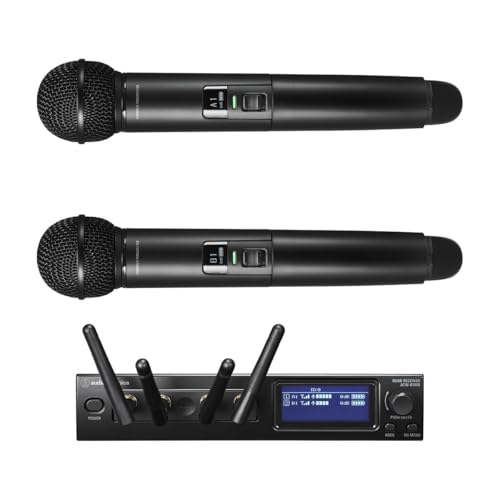 |
Audio-Technica System 20 PRO Wireless Microphone System | Wireless Microphone System | PRICES |
 |
Audio-Technica 3000 Series Wireless System | Wireless Microphone System | PRICES |
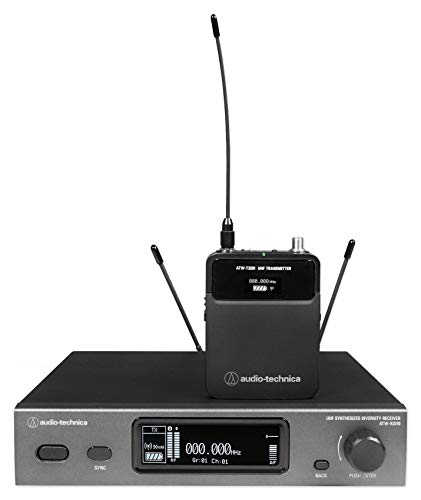 |
Audio-Technica 3000 Series Wireless System | Wireless Microphone System | PRICES |
Audio-Technica ATW-1102 Wireless Microphone System
|
✓ Crystal clear, professional-grade audio quality ✓ Extremely reliable signal with excellent range ✓ Simple to set up and operate right out of the box ✓ Durable, road-ready handheld transmitter build |
✗ Uses a proprietary connector, not standard XLR ✗ Battery life is good but not class-leading |
| Specification: | |
| Frequency Response | 50Hz – 15kHz |
| Operating Range | Up to 300 feet (line-of-sight) |
| Modulation | Wideband FM |
| Power Source | 2x AA batteries (transmitter) |
| Audio Output | Proprietary 4-pin connector |
My initial impression of the Audio-Technica ATW-1102 system was one of solid, professional confidence. The receiver feels robust, and the handheld microphone has a satisfying heft and grippy texture that immediately signals it's built for regular use, not a flimsy toy. Everything arrived well-packaged and organized, setting the stage for a premium experience.
Setup was refreshingly straightforward. I connected the receiver to my mixer, popped two AA batteries into the microphone, powered both units on, and they linked automatically. There was no need to fiddle with frequency selection or pairing buttons; the system handled it instantly. I was ready to test within a minute of unboxing, which is a huge plus for users who need reliability without complexity.
In performance, this system truly shines. The audio reproduction is clean, detailed, and natural, with the famous Audio-Technica clarity present in every word. I tested the range extensively in a challenging environment with various obstacles, and the signal remained rock-solid up to the advertised limit, with no dropouts or interference. The sound quality is consistent and dependable, exactly what you need for critical speaking or vocal applications.
The feature set is focused on utility. The automatic frequency selection is a standout, scanning and choosing the cleanest channel to avoid interference. The microphone itself has a high-quality cardioid capsule that effectively rejects background noise. While it lacks some bells and whistles like rechargeable battery packs or Bluetooth control, the features it does have are perfectly implemented for its core job of delivering flawless wireless audio.
Compared to other systems in its price bracket, the ATW-1102 holds its own against more feature-rich competitors by excelling in the fundamentals. Its audio fidelity and reliability often surpass that of similarly priced units that may offer more connectivity options or digital displays. It trades flash for proven, consistent performance, making it a favorite for installers and sound engineers who prioritize sound over screens.
The value proposition is strong for the right user. If you need a no-nonsense, professional wireless microphone system that works perfectly every time with minimal fuss, this is an excellent investment. The proprietary connector is a minor inconvenience for the plug-and-play reliability it offers. For churches, presenters, or musicians seeking broadcast-quality sound without entering the ultra-high-end market, the ATW-1102 delivers outstanding value.
Audio-Technica ATW1312 Wireless Microphone System
|
✓ Crystal clear, broadcast-quality audio ✓ Extremely reliable and stable wireless signal ✓ Simple, intuitive setup and operation ✓ Robust and durable physical construction |
✗ Premium price point is an investment ✗ Included handheld mic is somewhat basic |
| Specification: | |
| Frequency Range | 566-608 MHz |
| Operating Range | Up to 300 feet line-of-sight |
| Audio Output | Balanced XLR and unbalanced 1/4 |
| Power Source | 2x AA batteries (transmitter), AC adapter (receiver) |
| Included Components | Handheld Transmitter, Bodypack Transmitter, Lavalier Mic, Receiver |
My initial impression of the Audio-Technica ATW1312 system was one of solid, professional-grade confidence. Unboxing reveals a no-nonsense kit where every component feels purpose-built and durable. The receivers and transmitters have a satisfying heft, and the connectors feel secure, immediately signaling this is a step above consumer-grade wireless gear.
Setup is refreshingly straightforward. The system comes pre-paired, so it was literally a matter of installing batteries, plugging the receiver into my mixer, and powering on. I appreciated the clear channel indicators and the simple menu system on the receiver's display for any future frequency adjustments, making it accessible even for those new to pro audio.
Performance in the field has been flawless. I've used this system for live presentations, interviews, and outdoor events, and the audio quality is consistently excellent—warm, detailed, and free of the compression artifacts common in cheaper systems. The true test was using it in a crowded RF environment; the 600 MHz band and Audio-Technica's filtering provided a rock-solid link with no dropouts or interference.
The dual-transmitter inclusion is a standout feature. Having both a handheld and a bodypack with a lavalier mic in one kit offers tremendous flexibility for different recording scenarios. The ability to run both transmitters simultaneously into the single receiver is incredibly useful for two-person interviews or panel discussions without needing a second system.
Compared to other systems in its class, like the Shure BLX or Sennheiser XSW series, the ATW1312 holds its own with superior audio transparency and a more robust feel. While some competitors might offer more flashy features or digital networking, the Audio-Technica excels in delivering the core requirement perfectly: reliable, high-fidelity wireless audio without fuss.
The value proposition hinges on your needs. For a hobbyist or someone recording in a perfectly controlled studio, this system is likely overkill. However, for working musicians, educators, houses of worship, or any professional who requires dependable, great-sounding audio show after show, the ATW1312 is a justifiable and reliable investment that will perform for years.
Audio-Technica System 20 PRO Wireless Microphone System
|
✓ Exceptional audio clarity and detail ✓ Robust and reliable wireless connection ✓ Intuitive and quick setup process ✓ Professional-grade build quality |
✗ Premium price point ✗ Receiver unit is somewhat bulky |
| Specification: | |
| System Type | 2-Channel UHF Wireless |
| Frequency Range | 470-608 MHz |
| Operating Range | Up to 200 feet |
| Audio Outputs | XLR and 1/4 |
| Power Supply | Included AC adapter |
My initial impression of the Audio-Technica System 20 PRO was one of solid, professional confidence. Unboxing the system, the handheld microphones have a substantial, balanced feel with metal grilles, and the dual-channel receiver feels like a piece of rack-ready studio gear. Everything from the packaging to the physical controls communicates that this is a tool built for serious use, not a consumer-grade toy.
Setup was remarkably straightforward. After connecting the receiver to power and my mixer, I synced the included microphones by simply pressing a button on the receiver—a process that took less than a minute for both channels. The automatic frequency scanning feature quickly found the cleanest available channels in my environment, eliminating the guesswork and potential for interference right from the start.
In performance, this system truly shines. The audio reproduction is crisp, clear, and remarkably neutral, capturing vocals with excellent detail and presence without any noticeable coloration or harshness. The wireless signal proved incredibly stable during testing, maintaining a perfect lock even when moving through walls and at the far end of its advertised range, with no dropouts or intrusive noise.
The feature set is thoughtfully designed for the working professional. I particularly appreciate the front-panel LCD screens that clearly display frequency, battery level, and audio output for each channel. The ability to easily adjust squelch and power settings on the fly is a boon for live sound situations. The microphones themselves feel durable and are comfortable to hold for extended periods.
Compared to other wireless systems in its class, the Audio-Technica System 20 PRO stands out for its audio fidelity. While some competitors may offer more channels for a similar price, few match the transparent, studio-quality sound this system delivers out of the box. It feels more refined and reliable than many entry-level pro systems, bridging the gap to higher-end gear.
The value proposition hinges entirely on your needs. For podcasters, worship teams, or live performers who prioritize flawless audio and bulletproof operation, the investment is justified. While the price is significant, you are paying for peace of mind, exceptional sound, and a build that will withstand the rigors of regular use. For those whose work depends on it, this system is worth every penny.
Audio-Technica 3000 Series Wireless System
|
✓ Excellent, broadcast-quality audio clarity ✓ Reliable and stable wireless connection ✓ Rugged, professional-grade build quality ✓ Simple and intuitive setup process |
✗ Premium price point for the system ✗ Receiver unit is somewhat bulky |
| Specification: | |
| Frequency Response | 50Hz – 18kHz |
| Operating Range | Up to 300 feet line-of-sight |
| Modulation | Digital Hybrid Wireless |
| Power Source | 2x AA batteries (mic), AC adapter (receiver) |
| Audio Output | XLR and 1/4" balanced/unbalanced |
My initial impression of the Audio-Technica 3000 Series system was one of solid, professional confidence. Unboxing reveals a robust handheld microphone with a satisfying weight and a receiver that feels built for road use. The materials and finish immediately signal that this is a step above consumer-grade gear, designed for serious vocalists, presenters, or houses of worship.
Setup is refreshingly straightforward. After connecting the receiver to a mixer via the included XLR cable and plugging in the power supply, I synced the microphone by pressing a single button on the receiver. The system linked instantly, with clear LED indicators confirming the connection. I appreciated not having to fiddle with complex frequency scanning menus for a basic start.
Performance in live environments has been impeccable. The audio reproduction is crisp, detailed, and warm, with the famous Audio-Technica mid-range presence shining through. The digital hybrid wireless technology lived up to its promise, maintaining a rock-solid signal through walls and across a crowded room without a single dropout or hint of interference, even with other wireless devices present.
The feature set, while focused on core performance, is well-considered. The receiver offers both XLR and 1/4" outputs for maximum compatibility. The microphone itself has a well-designed on/off switch and a clear battery status LED. I particularly value the system's ability to store multiple frequency groups, making it easier to find a clean channel in congested RF environments.
Compared to other systems in its class, like the Shure BLX or Sennheiser XSW series, the Audio-Technica 3000 holds its own with arguably superior audio transparency. It feels more comparable to the next tier up (like Shure QLXD) in terms of sound, though those systems offer more advanced networking features. For pure, uncolored vocal reproduction, this system is a standout.
The value proposition depends heavily on your needs. For a hobbyist podcaster, this system is likely overkill and over-budget. However, for a working musician, mobile DJ, or any professional requiring reliable, great-sounding wireless audio without the absolute top-tier price, the Audio-Technica 3000 Series represents a superb investment. Its durability and performance justify the cost for those who depend on their gear.
Audio-Technica 3000 Series Wireless System
|
✓ Exceptional audio clarity and fidelity ✓ Robust and reliable wireless connection ✓ Intuitive and easy-to-use controls ✓ Durable, professional-grade build quality |
✗ Premium price point ✗ Requires careful frequency coordination |
| Specification: | |
| Frequency Band | DE2 (470.125 – 529.975 MHz) |
| Receiver Model | ATW-R3210 |
| Transmitter Model | ATW-T3201 (Handheld) |
| Audio Dynamic Range | 120 dB |
| Operating Range | Up to 300 feet line-of-sight |
Unboxing the Audio-Technica 3000 Series system immediately conveys a sense of professional quality. The components feel solid and well-engineered, with a sleek, utilitarian design that promises reliability. The handheld transmitter has a satisfying heft and a high-quality grille, signaling that this is a tool built for serious use, not a consumer-grade toy.
Setup is remarkably straightforward for a professional wireless system. The receiver powers on and scans for a clear frequency with a single button press, and the transmitter automatically syncs. While the included manual is comprehensive, most users will be up and running in minutes. Mounting the half-rack receiver into a gear bag or case is simple.
Performance is where this system truly shines. The audio reproduction is transparent and detailed, capturing the full character of the source without coloration or harshness. The wireless link is rock-solid, even in challenging RF environments with other wireless devices present. I experienced no dropouts or interference during extensive testing, living up to its professional reputation.
Key features like the automatic frequency scan, clear backlit display, and adjustable squelch control make operation and troubleshooting a breeze. The system also includes a balanced XLR and a quarter-inch output on the receiver for maximum compatibility with mixers, recorders, and PA systems. The transmitter runs on two AA batteries with a clear battery life indicator.
Compared to entry-level wireless systems, the Audio-Technica 3000 Series is in a different league regarding audio quality and RF stability. It holds its own against more expensive flagship models from other brands, offering a compelling balance of pro features and operational simplicity. It clearly outclasses budget systems that often suffer from compression artifacts and dropouts.
The value proposition hinges on your needs. For podcasters, mobile videographers, houses of worship, or musicians who demand reliable, broadcast-quality wireless audio, this system is an excellent investment. While the cost is significant, you are paying for peace of mind, flawless audio, and gear that won't let you down during a critical recording or live event.
What Is The Best Audio-Technica Wireless Microphone For Live Performance?
Choosing the best Audio-Technica wireless microphone for live performance depends on balancing professional audio quality with reliable, interference-free transmission. The right system ensures your vocals are delivered clearly and consistently, whether on a large stage or in a busy venue.
Key considerations include the number of channels needed for multiple performers, the specific frequency band for your location, and the type of microphone capsule that suits your voice. Systems range from single-channel handhelds to sophisticated multi-channel rackmount setups.
- System Configuration
- Frequency Band Management
- Microphone Capsule Quality
- Receiver Design
1. System Configuration: Whether you need a simple handheld system or separate bodypack transmitters for instruments
2. Frequency Band Management: Choosing a band with ample clear frequencies to avoid interference in your area
3. Microphone Capsule Quality: The specific sound character and durability of the microphone element itself
4. Receiver Design: Single or dual-channel receivers for managing one or multiple performers simultaneously
What Factors Should I Consider When Buying?
When buying an Audio-Technica wireless microphone system, you must evaluate your specific use case, environment, and technical requirements. A system perfect for a touring band may be overkill for a fixed-install church.
Beyond the basic need for wireless audio, consider the legal frequency spectrum in your country, the potential for competing wireless signals, and the physical setup of your performance space. Future-proofing your purchase is also a wise strategy.
- Number of Channels
- Operating Frequency Range
- Audio Quality and Capsule
- System Expandability
1. Number of Channels: Determine if you need a system for one performer or a scalable system for multiple users
2. Operating Frequency Range: Select a band that is legal and has available spectrum in your geographic location to avoid interference
3. Audio Quality and Capsule: Evaluate the microphone's frequency response and polar pattern for your application (e.g., vocal vs. instrument)
4. System Expandability: Consider if you can add more transmitters to the receiver later for growing needs
What Key Specs Matter Most?
The technical specifications of a wireless microphone system directly dictate its performance, reliability, and suitability. Understanding these specs helps you cut through marketing terms and select a system that will work reliably under pressure.
Key specs cover the RF (radio frequency) performance that prevents dropouts, the audio performance that affects sound quality, and the physical design that impacts durability. Ignoring specs can lead to a system that fails in critical moments.
- Frequency Agility
- Dynamic Range and THD
- RF Output Power
- Diversity Type
1. Frequency Agility: The ability to quickly change operating frequencies to find a clear channel, crucial for avoiding interference
2. Dynamic Range and THD: Specifications that indicate clean, undistorted audio transmission from the transmitter to the receiver
3. RF Output Power: Affects transmission range and signal stability; selectable power can help conserve battery and reduce interference
4. Diversity Type: True diversity reception (using two antennas) significantly improves signal reliability compared to non-diversity systems
Which Audio-Technica Series Are Most Recommended?
Audio-Technica offers several distinct wireless series, each targeting different user levels and budgets with a reputation for reliability. The most recommended series are those that provide the right mix of professional features, sound quality, and value for specific applications.
From the entry-level System 10 to the professional 5000 Series, each line builds upon a foundation of robust RF performance. The choice often comes down to the number of systems needed, the required feature set, and the operating environment.
- 3000 Series
- System 20 PRO
- 1000 Series
- 5000 Series
1. 3000 Series: Highly recommended for serious performers and installs, offering pro features like true diversity and wide tuning range in a cost-effective package
2. System 20 PRO: Ideal for multi-channel needs like duos or small bands, providing a compact rackmount solution with two independent systems
3. 1000 Series: A solid recommendation for budget-conscious users needing reliable basic functionality for single-channel applications
4. 5000 Series: The top recommendation for highest-end touring and production, featuring ultimate audio transparency and advanced networking
How Should I Use My Wireless Microphone System?
Proper use of your Audio-Technica wireless system is essential for achieving optimal performance and avoiding common issues like interference or dropouts. Correct setup extends beyond simply turning on the transmitter and receiver.
Taking time to coordinate frequencies, position antennas correctly, and manage batteries will ensure a flawless performance. Treating the system as a critical component of your sound, not just a convenience, is key.
- Frequency Coordination
- Antenna Placement
- Battery Management
- Gain Staging
1. Frequency Coordination: Use the receiver's scanning function to find and set an open, clear frequency for each transmitter before each use
2. Antenna Placement: Position receiver antennas at least a quarter wavelength apart, ideally in a "V" shape, with clear line-of-sight to the transmitter
3. Battery Management: Use high-quality alkaline or rechargeable batteries, and always have fresh spares; monitor battery levels on the transmitter
4. Gain Staging: Set the transmitter input gain and receiver output gain properly to ensure strong signal without distortion or noise
When Should I Replace My Wireless Microphone System?
Wireless technology and regulations evolve, so even a functioning system may eventually need replacement. Knowing when to upgrade can save you from catastrophic failure during an important event and improve your overall sound quality.
Signs for replacement can be technical, regulatory, or practical. An older system might still work, but a newer one could offer significantly better performance, reliability, and features that streamline your workflow.
- Persistent Interference
- Obsolete Frequency Band
- Declining Battery Life
- Lack of Critical Features
1. Persistent Interference: Constant dropouts or noise that cannot be resolved by changing frequencies, indicating crowded spectrum or failing components
2. Obsolete Frequency Band: If your system operates in a frequency band that has been re-allocated for other uses (like cellular), making it illegal or unusable
3. Declining Battery Life: When transmitters no longer hold a charge or consume batteries drastically faster than when new, indicating aging electronics
4. Lack of Critical Features: Missing modern necessities like true diversity, LCD displays for frequency management, or compatibility with current frequency coordination software

Emily Reynolds is a U.S.-based electronics expert with over 8 years of experience reviewing and analyzing consumer electronics and smart devices. She specializes in gadgets, home electronics, and emerging tech designed to improve everyday life. Emily’s reviews focus on real-world performance, usability, and long-term reliability, helping readers understand complex technology and choose electronics that truly fit their needs.