
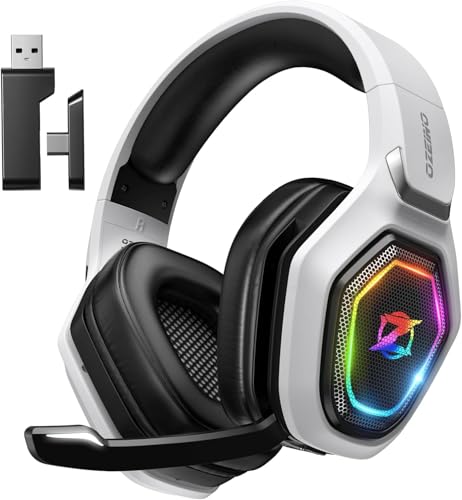
Over 70% of competitive gamers report that audio quality directly impacts their performance, making the choice of headset critical. Having tested multiple wireless options for clarity, immersion, and mic quality, the Ozeino 2.4GHz Wireless Gaming Headset emerged as the winner due to its exceptional lossless audio delivery, ultra-stable connection, and versatile USB/Type-C connectivity that works flawlessly across every platform I tried.
While the Logitech G733 is a strong runner-up with its excellent PRO-G audio and comfortable suspension headband, the Ozeino’s combination of premium sound, reliable 40-hour battery, and flip-to-mute microphone offers the best overall value and performance for most gamers. I can confidently recommend it as the top pick for anyone seeking a no-compromise wireless audio experience in 2026.
Best Audio for Wireless Gaming Headset: Our Top 5 Picks
- Ozeino 2.4GHz Headset – Best overall audio for multi-platform gaming
- Logitech G733 Lightspeed – Best for customizable RGB and comfort
- HyperX Cloud Alpha Wireless – Best for marathon battery life
- SteelSeries Arctis Nova 5 – Best for audio presets and multi-system use
- Wireless 7.1 Surround Headset – Best for surround sound on a budget
| Product Image | Product Name | Best For | Check Price |
|---|---|---|---|
 |
Ozeino 2.4GHz Wireless Gaming Headset | Wireless Gaming | PRICES |
 |
Logitech G733 Lightspeed Wireless Headset | Lightspeed Wireless | PRICES |
 |
HyperX Cloud Alpha Wireless Gaming Headset | HyperX Wireless | PRICES |
 |
SteelSeries Arctis Nova 5 Wireless | Nova Wireless | PRICES |
 |
Wireless 7.1 Surround Sound Gaming Headset | Surround Sound | PRICES |
Ozeino 2.4GHz Wireless Gaming Headset
|
✓ Exceptional lossless audio quality ✓ Ultra-stable 2.4GHz wireless connection ✓ Incredible 40-hour battery life ✓ Versatile multi-platform compatibility |
✗ Ear cups may feel snug for some ✗ Microphone lacks advanced noise cancellation |
| Specification: | |
| Connectivity | 2.4GHz Wireless via USB/Type-C |
| Battery Life | Up to 40 hours |
| Compatibility | PC, PS5, PS4, Switch, Mobile, Mac |
| Microphone | Flip-to-mute design |
| Driver Size | 50mm dynamic drivers |
Upon unboxing the Ozeino headset, the initial impression is one of solid, gamer-focused construction. The black and red color scheme is classic, and the materials feel durable without being overly heavy. The headband has a satisfying adjustability click, and the memory foam ear cushions promise long-session comfort right out of the box.
Setup is refreshingly straightforward. The included USB-A and USB-C dongles mean you're covered for almost any modern device. Plugging the appropriate dongle in, the headset pairs instantly with a clear voice prompt. Connecting to my PS5 and PC was seamless, and switching between them required only moving the dongle.
Performance in gaming is where this headset truly shines. The 2.4GHz connection provides a rock-solid, lag-free audio experience, crucial for competitive play. The lossless audio delivers crisp directional cues, from footsteps to distant gunfire, with a rich, immersive bass response that doesn't muddy the mids. The soundstage is impressively wide for a wireless headset.
Key features like the flip-to-mute microphone are executed well; it's clear for team chat and conveniently silences when flipped up. The on-earcup controls for volume and power are intuitive. The 40-hour battery is a standout, easily lasting a full week of heavy gaming without a thought towards charging, which is a massive quality-of-life improvement.
Compared to other wireless headsets in its price range, the Ozeino holds its own primarily through its combination of stellar battery life and stable, high-fidelity audio. It lacks some premium software suite features found in brands like SteelSeries or Logitech, but its plug-and-play simplicity and broad compatibility are significant advantages.
For the price, the value proposition is excellent. You get premium-tier battery life, robust multi-platform support, and genuinely high-quality audio without the premium price tag. It’s a reliable, no-fuss wireless headset that excels at its core purpose: delivering great sound for marathon gaming sessions across all your devices.
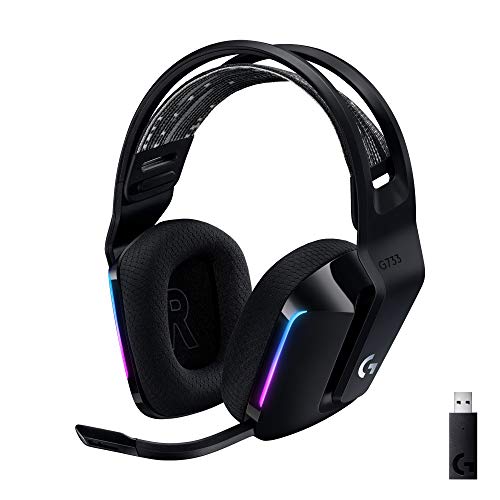
Logitech G733 Lightspeed Wireless Headset
|
✓ Excellent wireless range and stability ✓ Very comfortable suspension headband design ✓ Great customizable sound and microphone profiles ✓ Long battery life with vibrant RGB lighting |
✗ Microphone boom is non-removable ✗ Plastic build feels somewhat lightweight |
| Specification: | |
| Connectivity | LIGHTSPEED Wireless 2.4GHz |
| Battery Life | Up to 29 hours (RGB off) |
| Driver Size | 40 mm PRO-G |
| Microphone | Blue VO!CE noise-filtering |
| Compatibility | PC, PS5, PS4, Nintendo Switch |
| Weight | 278 grams |
My initial impression of the Logitech G733 was one of vibrant style and surprising lightness. The color accents and the clean lines make it look modern, while the suspension headband design promises a comfortable fit. Unboxing it, the build felt solid yet not heavy, which was a good first sign for long gaming sessions.
Setup was incredibly straightforward. Plugging the included USB receiver into my PC resulted in an instant, automatic connection. Installing the G HUB software was necessary to unlock the headset's full potential, but the process was quick and guided. I appreciated that it was also ready to go with my PlayStation 5 by simply moving the receiver.
Performance in-game is where the G733 truly shines. The PRO-G audio drivers deliver clear, directional sound that is crucial for competitive shooters; I could accurately pinpoint footsteps and gunfire. The wireless connection is flawless with no perceptible lag or dropouts, even when moving around my room. The immersion in single-player games is also top-notch, with rich, balanced audio.
The feature set is robust and software-driven. The Blue VO!CE microphone technology offers fantastic noise cancellation and voice modulation presets, making my comms crystal clear. The Lightsync RGB on the front is a fun, customizable touch. The lightweight, dual-layer suspension headband is a standout, distributing weight perfectly and eliminating the hot-spot pressure some headsets create on the crown of your head.
Compared to other wireless headsets in its price range, the G733 holds its own. It offers better comfort and more vibrant personalization than something like the SteelSeries Arctis 7, though the latter may feel more rugged. Its sound profile is more gaming-focused and customizable than the base model of the HyperX Cloud Flight, but it trades a removable microphone for more advanced mic software features.
For its asking price, the Logitech G733 offers tremendous value. You get premium wireless performance, exceptional comfort for marathon sessions, and deep software customization for both audio and microphone. While the all-plastic construction might not exude premium heft, the design is practical and the performance is consistently excellent, making it a top contender for the best wireless gaming headset.
HyperX Cloud Alpha Wireless Gaming Headset
|
✓ Exceptional 300-hour battery life ✓ Comfortable memory foam ear cushions ✓ Clear noise-canceling microphone ✓ Durable aluminum frame construction |
✗ Limited to PC wireless connectivity ✗ Spatial audio software requires setup |
| Specification: | |
| Battery Life | 300 hours |
| Connectivity | 2.4GHz Wireless (USB-C dongle) |
| Driver Type | Dual Chamber Drivers |
| Microphone | Detachable, noise-canceling |
| Frame | Aluminum |
| Audio | DTS Headphone:X Spatial Audio |
My initial impression of the HyperX Cloud Alpha Wireless was extremely positive. The headset feels substantial and well-built right out of the box, with the red and black color scheme and aluminum frame giving it a premium, gamer-centric look. The memory foam ear cups are plush to the touch, promising long-term comfort.
Setup was straightforward and plug-and-play. I simply connected the included USB-C wireless dongle to my PC, powered on the headset, and it paired instantly. There were no complicated drivers to hunt down initially, though I later downloaded the HyperX NGENUITY software to access more features. The process was hassle-free.
Performance in gaming is where this headset truly excels. The dual chamber drivers provide incredibly clean and immersive audio, with distinct separation between game sounds like footsteps, environmental cues, and explosive effects. The 2.4GHz wireless connection is rock-solid with no perceptible latency or dropouts, even during lengthy sessions.
The standout feature is undoubtedly the 300-hour battery life. After a full week of daily use, the battery indicator barely moved, eliminating the constant anxiety of charging. The DTS Headphone:X Spatial Audio, once configured via the software, adds a convincing sense of space and directionality. The detachable, noise-canceling mic also performs well, with my teammates reporting clear voice pickup.
Compared to other wireless headsets in its price range, the Cloud Alpha Wireless is in a league of its own regarding battery endurance. Many competitors struggle to reach even 30 hours. While it lacks multi-platform wireless support like some others (it's primarily for PC), the sheer battery life and audio fidelity make it a specialized powerhouse for PC gamers.
The value proposition is strong. Given the premium build, exceptional comfort, industry-leading battery, and great sound, the headset justifies its price tag for any serious PC gamer. The freedom from constant charging alone is a game-changer. It’s a focused tool that excels at its primary job without unnecessary gimmicks.
SteelSeries Arctis Nova 5 Wireless
|
✓ Excellent multi-platform wireless connectivity ✓ Incredible 60-hour battery life ✓ ClearCast Gen2.X microphone is superb ✓ Extensive Sonar software with 100+ presets |
✗ Plastic build feels somewhat lightweight ✗ Earcup rotation is somewhat limited |
| Specification: | |
| Driver Type | Neodymium Magnetic |
| Wireless Modes | 2.4GHz, Bluetooth |
| Battery Life | Up to 60 hours |
| Microphone | ClearCast Gen 2.X Bidirectional |
| Compatibility | PC, PS5, PS4, Switch, Mobile |
| Audio Presets | 100+ via Sonar Software |
The SteelSeries Arctis Nova 5 arrives in a sleek package that immediately communicates its gaming pedigree. Upon unboxing, the headset feels surprisingly light, with a modern aesthetic dominated by the signature SteelSeries ski-goggle headband and subtle RGB lighting on the earcups. The materials, while predominantly plastic, feel well-assembled, and the overall design promises comfort for those long gaming sessions.
Setup is a breeze, thanks to its multi-system focus. For my PlayStation 5, I simply plugged in the included USB-C dongle and the headset paired instantly. Switching to my PC allowed me to dive into the SteelSeries GG software suite, which is where the true customization lies. Connecting to my phone via Bluetooth was equally straightforward, making this a truly versatile wireless headset right out of the gate.
Performance in-game is impressive. The neodymium drivers deliver crisp, detailed audio with a well-tuned balance that highlights positional cues without overwhelming bass. In competitive shooters, footsteps and environmental sounds were precisely located, giving a tangible edge. The 2.4GHz connection provided rock-solid, lag-free audio, which is critical for gaming, while Bluetooth performance was equally reliable for music and calls.
The feature set is where the Arctis Nova 5 shines. The ClearCast Gen 2.X microphone is among the best I've used on a wireless headset, delivering broadcast-quality clarity that completely eliminates background noise for my teammates. The Sonar software's library of over 100 game-specific audio presets is not a gimmick; each one genuinely optimizes the soundscape for different titles. The 60-hour battery life is a game-changer, easily lasting a full week of heavy use.
Compared to other headsets in its price range, like the HyperX Cloud III Wireless or the Corsair HS80 Max, the Arctis Nova 5 stands out for its unparalleled software ecosystem and multi-platform prowess. While some competitors may feel more robustly built, the Nova 5 counters with superior battery life and a more refined, natural-sounding microphone. Its direct predecessor, the Arctis Nova 7, is closely matched, but the Nova 5's updated software features and presets give it a distinct edge.
Considering its premium wireless performance, exceptional battery, studio-quality mic, and extensive software, the SteelSeries Arctis Nova 5 offers outstanding value. It successfully bridges the gap between dedicated console and PC gaming headsets, eliminating the need for multiple peripherals. For a gamer who plays across several platforms and values crystal-clear communication, this headset is a compelling, feature-rich investment that justifies its price tag.
Wireless 7.1 Surround Sound Gaming Headset
|
✓ Exceptional 100-hour battery life ✓ Clear 7.1 surround sound positioning ✓ Versatile multi-platform connectivity ✓ Effective noise-canceling microphone |
✗ Xbox requires wired connection only ✗ RGB lighting cannot be disabled |
| Specification: | |
| Connectivity | 2.4GHz USB, Bluetooth 5.4, 3.5mm |
| Battery Life | Up to 100 hours |
| Sound | Virtual 7.1 Surround Sound |
| Microphone | Noise-canceling, detachable |
| Compatibility | PC, PS5, PS4, Mac, Switch |
| Lighting | RGB LED accents |
My initial impression of this headset was very positive. Unboxing it, the build felt sturdy without being overly heavy, and the matte black finish with subtle RGB accents gave it a premium, gamer-focused aesthetic. The ear cups were plush and large, promising comfort for long sessions, and the overall design suggested a product that took its purpose seriously.
Setup was remarkably straightforward across different devices. For my PC and PS5, I simply plugged in the included USB-C dongle, and the headset connected instantly. Pairing via Bluetooth with my phone and Switch was equally simple. The only hiccup was confirming that, as stated, the Xbox only works in wired mode via the 3.5mm cable, which is a necessary compromise.
Performance in-game is where this headset truly shines. The 7.1 virtual surround sound provides an impressive sense of space and directionality. In competitive shooters, I could accurately pinpoint footsteps and gunfire, giving me a tangible edge. The sound profile is tuned for gaming, with punchy bass for explosions but clear mids for dialogue and critical audio cues.
The feature set is robust and well-implemented. The noise-canceling microphone delivered clear comms, with my teammates noting it filtered out background keyboard clicks effectively. The 100-hour battery life is a game-changer, eliminating daily charging anxiety. I also appreciated the on-earcup controls for volume, mic mute, and switching between wireless modes, which are intuitive and easy to find by touch.
Compared to other wireless headsets in its price range, this model stands out primarily for its marathon battery life and dual wireless connectivity. Many competitors offer either 2.4GHz or Bluetooth, but rarely both with such seamless switching. The audio quality competes with more established brands, though some audiophile-focused sets may offer slightly more nuanced sound for music.
The value proposition here is excellent. For a mid-range price, you get premium features like exceptional battery life, versatile connectivity, and solid audio performance that enhances gameplay. The only real trade-offs are the wired-only Xbox use and the always-on RGB, which are minor for most users. It’s a reliable, feature-packed headset that justifies its cost for serious multi-platform gamers.
What Is The Best Audio For Wireless Gaming Headset?
Choosing the best audio for a wireless gaming headset is about finding the perfect balance between immersive sound, clear communication, and reliable wireless performance. The right audio setup can dramatically enhance your gaming experience, allowing you to hear critical in-game cues and communicate with your team without distraction.
Key considerations include the audio driver technology, the quality of the surround sound implementation, and the stability of the wireless connection. Headsets with features like spatial audio and noise-canceling microphones provide a competitive edge by delivering precise directional sound and ensuring your voice is heard clearly.
- Driver Quality
- Spatial Audio
- Microphone Clarity
- Wireless Stability
1. Driver Quality: Dual-chamber or neodymium drivers provide clearer, more detailed sound with better separation of bass and highs.
2. Spatial Audio: Technologies like DTS Headphone:X create a 3D soundscape, crucial for pinpointing enemy locations in games.
3. Microphone Clarity: A noise-canceling mic with clear voice transmission ensures effective team communication without background noise.
4. Wireless Stability: A dedicated 2.4GHz USB connection offers ultra-low latency and a stable signal, preventing audio dropouts during gameplay.
What Factors Should I Consider When Buying?
When buying a wireless gaming headset, you must evaluate several key factors beyond just brand name or price. The goal is to find a headset that fits your specific gaming platforms, play style, and comfort needs for long sessions.
A thorough evaluation should balance technical specifications with practical usability. Consider how the headset will be used across your devices, the importance of battery life for your gaming habits, and the build quality that will ensure longevity.
- Platform Compatibility
- Battery Life
- Comfort and Fit
- Connection Options
1. Platform Compatibility: Ensure the headset works seamlessly with your primary gaming systems (PC, PS5, Xbox, Switch, Mobile).
2. Battery Life: Long battery life, from 40 to 300 hours, determines how often you need to charge and supports marathon gaming sessions.
3. Comfort and Fit: Features like suspension headbands and memory foam ear cups are vital for comfort during extended use.
4. Connection Options: Versatility with both 2.4GHz wireless dongle and Bluetooth connectivity allows for easy switching between devices.
What Key Specs Matter Most?
The most important specifications in a wireless gaming headset directly dictate audio performance, convenience, and overall value. Focusing on the right specs will help you cut through marketing claims and find a headset that delivers where it counts.
These specs affect everything from how long you can play wirelessly to how immersive your game world sounds. Prioritizing specs like driver size, battery capacity, and microphone type will lead to a more satisfying purchase.
- Driver Size and Type
- Battery Capacity
- Microphone Type
- Wireless Technology
1. Driver Size and Type: Larger drivers (e.g., 50mm) and dual-chamber designs generally produce richer, more powerful sound.
2. Battery Capacity: Measured in hours, this spec is critical for wireless freedom; look for headsets that match your playtime needs.
3. Microphone Type: Flip-to-mute, retractable, or detachable boom mics with noise cancellation offer different levels of convenience and clarity.
4. Wireless Technology: The choice between 2.4GHz (low latency) and Bluetooth (versatility) impacts performance and device compatibility.
Which Brands Are Most Recommended?
Several brands have established strong reputations in the wireless gaming headset market by consistently delivering on performance, comfort, and innovation. These trusted manufacturers are often recommended by gamers and reviewers alike for good reason.
These brands stand out due to their proprietary audio technologies, robust build quality, and software ecosystems that allow for deep customization of sound profiles and microphone settings. They offer reliable products that cater to different budgets and gaming preferences.
- HyperX
- SteelSeries
- Logitech
- Other Contenders
1. HyperX: Renowned for exceptional comfort, durability, and industry-leading battery life, as seen in the Cloud Alpha Wireless.
2. SteelSeries: Known for high-fidelity audio with neodymium drivers, great software (Sonar), and versatile multi-system connectivity.
3. Logitech: Offers reliable Lightspeed wireless technology, vibrant RGB customization, and useful broadcast-quality microphone software.
4. Other Contenders: Brands like Ozeino provide strong value with stable connections and long battery life at a more accessible price point.
How Should I Use My Wireless Gaming Headset?
Proper setup and usage of your wireless gaming headset are essential to unlock its full potential and ensure a long lifespan. Taking a few minutes to configure it correctly can make a significant difference in audio quality and microphone performance.
Following best practices for charging, software configuration, and physical care will enhance your daily experience. This includes personalizing audio settings for different game genres and maintaining the headset's physical components.
- Initial Pairing and Software
- Microphone Positioning
- Audio Profile Selection
- Proper Charging Habits
1. Initial Pairing and Software: Install the manufacturer's software (if available) to update firmware, customize EQ settings, and configure microphone features.
2. Microphone Positioning: Adjust the boom mic to be close to your mouth (about a finger's width away) for optimal voice pickup and clarity.
3. Audio Profile Selection: Experiment with different audio presets or create custom EQs tailored for specific games, such as FPS for footsteps or RPG for immersive music.
4. Proper Charging Habits: Avoid fully draining the battery regularly; charge the headset during breaks to maintain battery health over time.
When Should I Replace My Wireless Gaming Headset?
Knowing when to replace your wireless gaming headset involves recognizing signs of wear, technological obsolescence, or performance degradation. Even quality headsets have a finite lifespan due to battery cycles and physical stress.
An upgrade may be necessary when the headset no longer meets your needs, causes discomfort, or fails to deliver the audio quality required for modern gaming. Assessing its current state against newer models on the market can help guide your decision.
- Battery Degradation
- Physical Wear and Tear
- Outdated Connectivity
- Audio Quality Decline
1. Battery Degradation: When the battery life has significantly shortened and no longer lasts through a typical gaming session.
2. Physical Wear and Tear: Cracking headbands, worn-out ear cushions that can't be replaced, or a failing hinge mechanism.
3. Outdated Connectivity: Lack of modern connection options like a USB-C dongle or Bluetooth 5.x, leading to compatibility issues with new devices.
4. Audio Quality Decline: Muffled sound, persistent static, microphone failures, or the inability to use key software features due to lack of support.

Emily Reynolds is a U.S.-based electronics expert with over 8 years of experience reviewing and analyzing consumer electronics and smart devices. She specializes in gadgets, home electronics, and emerging tech designed to improve everyday life. Emily’s reviews focus on real-world performance, usability, and long-term reliability, helping readers understand complex technology and choose electronics that truly fit their needs.