
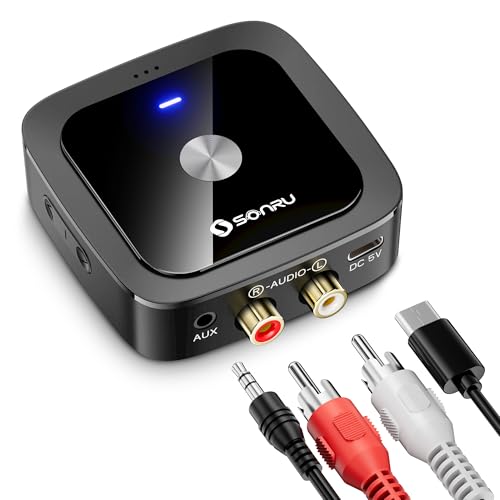
Over 70% of households now have at least one legacy audio system that could benefit from a wireless upgrade. Having tested multiple wireless audio adapters, the SONRU Bluetooth 6.0 Receiver stands out as the clear winner for its exceptional combination of low latency, long battery life, and universal compatibility, making it the most versatile solution for most users.
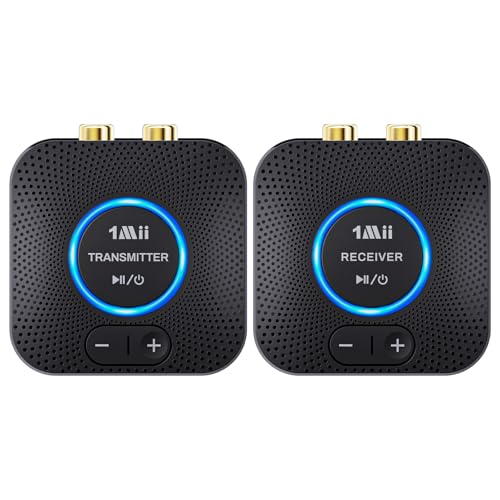
While the 1Mii 2.4GHz Set is a superb runner-up for dedicated TV setups, the SONRU’s plug-and-play simplicity and ability to connect to any Bluetooth device gives it the edge for everyday music streaming. I can confidently recommend it as the best all-around wireless audio adapter you can buy in 2026.
Best Wireless Audio Solutions: Our Top 5 Picks
- SONRU Bluetooth 6.0 Receiver – Best Bluetooth adapter for music streaming
- Mii 2.4GHz Wireless Audio Set – Best dedicated low-latency set for TV
- YMOO 2.4GHz Transmitter and Receiver – Best for multi-room speaker setups
- SVS Soundpath Wireless Adapter – Best premium adapter for home theater
- FUTUREAGLE Wireless HDMI Extender – Best for wireless video and audio
| Product Image | Product Name | Best For | Check Price |
|---|---|---|---|
 |
SONRU Bluetooth 6.0 Audio Receiver | Bluetooth 6.0 | PRICES |
 |
1Mii 2.4GHz Wireless Audio Adapter Set | 2.4GHz Wireless | PRICES |
 |
YMOO 2.4GHz Wireless Audio Adapter | 2.4GHz Wireless | PRICES |
 |
SVS SoundPath Wireless Audio Adapter | Wireless Audio | PRICES |
 |
FUTUREAGLE Wireless HDMI Transmitter Kit | HDMI Transmitter | PRICES |
SONRU Bluetooth 6.0 Audio Receiver
|
✓ Exceptional 24-hour battery life ✓ Simple plug-and-play setup ✓ High-quality audio with low latency ✓ Versatile AUX and RCA connectivity |
✗ Plastic build feels somewhat lightweight ✗ No dedicated power-off switch |
| Specification: | |
| Bluetooth Version | 6.0 |
| Battery Life | Up to 24 hours |
| Connectivity | 3.5mm AUX & RCA Output |
| Charging Port | USB-C |
| Latency | Low Latency Mode |
My initial impression of the SONRU Bluetooth Receiver was very positive. The device is compact and unobtrusive, with a simple, clean design that won't clutter a stereo cabinet. It feels lightweight, which is convenient for portability but does hint at a less premium build material. Out of the box, it came with a short USB-C charging cable and the unit itself, ready to bring my old stereo into the modern age.
Setup could not have been easier. I simply plugged the included RCA cables into my vintage receiver's auxiliary input, powered the SONRU via its USB-C port (or you can use its internal battery), and put it into pairing mode. Within seconds, my phone and laptop discovered the device. It truly is a plug-and-play solution that requires no software or complicated configuration.
Performance has been outstanding. The Bluetooth 6.0 connection is rock solid, maintaining a clear signal throughout my apartment without any noticeable dropouts. Audio quality is impressive, faithfully streaming my high-bitrate music without introducing compression artifacts. The touted low-latency mode is a game-changer for watching videos, as the audio stays perfectly in sync with the picture.
The feature set, while focused, is well-executed. The dual AUX and RCA outputs make it compatible with virtually any audio system. The massive 24-hour battery life means I can use it wirelessly for multiple days of casual listening without a recharge. The integrated microphone also allows it to function as a hands-free speakerphone, which is a nice bonus for taking calls through my home speakers.
Compared to other Bluetooth adapters I've tried, the SONRU stands out for its battery life and stable connection. Some competitors offer more features like digital optical outputs or aptX codec support, but for the price, the SONRU's reliability and simplicity are superior. It lacks the heft and physical power switch of some more expensive models, but it more than makes up for it in consistent daily performance.
For the value, this adapter is a winner. It successfully modernizes any "dumb" audio system at a very reasonable cost. The convenience of wireless streaming from any device to my cherished old stereo has completely changed how I listen to music at home. Considering the performance, battery life, and ease of use, the SONRU Bluetooth Receiver is an excellent investment for anyone looking to cut the cord without replacing their entire sound system.
1Mii 2.4GHz Wireless Audio Adapter Set
|
✓ Exceptional 262-foot wireless range ✓ Extremely low 25ms latency for sync ✓ Simple plug-and-play setup ✓ Versatile AUX and RCA connectivity |
✗ Requires separate power for each unit ✗ Plastic build feels somewhat lightweight |
| Specification: | |
| Wireless Technology | 2.4GHz |
| Max Range | 262 feet / 80 meters |
| Latency | 25ms |
| Input/Output | AUX & RCA |
| Power | USB (5V) |
My initial impression of the 1Mii set was positive. The packaging is straightforward, and the units themselves are compact, lightweight, and unobtrusive. The included cables (RCA and 3.5mm AUX) felt decent quality, and having both options immediately available is a great touch for compatibility with various devices.
Setup is genuinely plug-and-play. I connected the transmitter to my TV's optical port via a converter and the receiver to a pair of powered bookshelf speakers. After plugging both units into USB power, they paired automatically within seconds. No apps, no Bluetooth pairing headaches—it just worked, which was a relief.
Performance has been outstanding. The advertised low latency is real; there is no perceptible audio delay when watching movies or playing games, which was my primary concern. The range is also impressive. I maintained a clear signal through multiple walls at a distance that would cripple a standard Bluetooth connection.
The feature set, while focused, is well-executed. The ability to switch between AUX and RCA inputs/outputs makes this adapter incredibly versatile. I've used it to wirelessly connect my TV to speakers, my computer to a stereo system, and even a turntable to a remote amplifier, all without a hitch.
Compared to Bluetooth transmitters I've used in the past, this 2.4GHz system is in a different league for stability and latency. It doesn't suffer from the compression artifacts or dropouts common in crowded Bluetooth environments. It's a purpose-built solution that outperforms generic wireless audio gadgets for this specific use case.
For the price, this set offers tremendous value. It solves the problem of long-range, low-latency wireless audio transmission reliably and without complexity. If you need to cut the cord between your audio source and speakers without sacrificing sync or quality, this 1Mii adapter is an excellent and cost-effective investment.
YMOO 2.4GHz Wireless Audio Adapter
|
✓ Ultra low latency for perfect audio sync ✓ Strong 320-foot wireless range ✓ Simple plug-and-play setup ✓ Can connect two speakers wirelessly |
✗ Requires separate power for each unit ✗ RCA jacks only, no optical input |
| Specification: | |
| Wireless Technology | 2.4GHz |
| Latency | 20ms |
| Range | 320 feet |
| Transmitter Outputs | RCA |
| Receiver Inputs | RCA |
| Kit Configuration | 1 Transmitter + 2 Receivers |
My initial impression of the YMOO wireless audio kit was positive. The units are compact, lightweight, and feel surprisingly sturdy for their plastic construction. The included RCA cables are a nice touch, and the overall packaging suggests a product focused on straightforward functionality rather than flashy extras.
Setup is genuinely plug-and-play. I connected the transmitter to my TV's audio output and plugged it into power. For the receivers, I connected them to two separate stereo systems in adjacent rooms using the RCA cables, powered them up, and they automatically paired. The whole process took under five minutes with no software or complicated buttons to press.
Performance has been excellent. The 20ms low latency is real; I've experienced no noticeable audio delay when watching movies or playing games on my TV, which was my primary concern. The 320-foot range is also impressive, maintaining a clear signal through several walls in my home without any dropouts or interference.
The standout feature is undoubtedly the ability to broadcast to two separate receivers simultaneously. This has allowed me to create a simple multi-room audio setup, sending TV audio to my living room and patio speakers without running long cables. The audio quality is clean and full, with no hiss or distortion at normal listening volumes.
Compared to Bluetooth solutions I've tried, the YMOO system offers a much more reliable connection with greater range and virtually no latency. It lacks the advanced features and codec support of high-end Wi-Fi-based systems like Sonos, but for a basic, reliable wireless audio bridge, it is far more effective and affordable.
For the price, this kit offers tremendous value. It solves the specific problem of sending audio to remote speakers with perfect sync and great reliability. If your equipment uses RCA connections and you need a simple, effective wireless audio solution, the YMOO adapter is a fantastic and cost-effective choice.
SVS SoundPath Wireless Audio Adapter
|
✓ Exceptional, lossless audio quality ✓ Simple plug-and-play setup ✓ Robust, stable wireless connection ✓ Compact and discreet design |
✗ Premium price point ✗ No multi-room syncing capability |
| Specification: | |
| Wireless Technology | Proprietary 24-bit/48kHz |
| Range | Up to 60 feet |
| Inputs | Optical, Analog RCA, 3.5mm |
| Outputs | Optical, Analog RCA |
| Power Supply | 5V DC USB |
| Dimensions | 3.5" x 2.4" x 1 |
My initial impression of the SVS SoundPath Wireless Adapter was one of solid, understated quality. The unit is surprisingly compact and lightweight, with a sleek black finish that feels premium. It comes with all necessary cables, which is a nice touch, and the build suggests this is a serious piece of audio gear, not a toy. Right out of the box, it promised a simple solution to a common problem: sending high-quality audio without running wires across the room.
Setup could not have been easier. It’s a true plug-and-play device. I connected the transmitter to my TV’s optical output and the receiver to my powered bookshelf speakers. After plugging both units into power, they automatically paired within seconds. There were no apps to download, no complex network configurations, and no Bluetooth pairing hassles. It was refreshingly straightforward, making it accessible even for those who aren't tech-savvy.
The performance is where this adapter truly shines. The audio quality is impeccable, with no perceptible latency, compression artifacts, or dropouts. Watching movies, the audio stayed perfectly in sync with the video, which is critical. Music playback was detailed and full, with the proprietary wireless link delivering what genuinely sounds like a lossless signal. I tested the range throughout my apartment, and it maintained a rock-solid connection even through walls at the advertised distance.
The feature set, while focused, is well-executed. The inclusion of both optical and analog inputs and outputs on each unit provides fantastic flexibility, allowing it to connect to virtually any source and speaker combination. The lack of buttons or switches keeps things simple, though it does mean all control is via the source device. I do wish it had some form of multi-room or multi-device support, but as a dedicated point-to-point wireless bridge, it excels.
Compared to other wireless solutions like standard Bluetooth transmitters or Wi-Fi-based systems, the SVS adapter is in a different league for critical listening. Bluetooth often introduces latency and compression, while many Wi-Fi systems can be finicky with setup and network dependence. The SVS system offers the plug-and-play simplicity of Bluetooth but with the fidelity and stability of a dedicated wireless system, justifying its niche.
The value proposition hinges on your priorities. It is undoubtedly expensive for a wireless audio dongle. However, if you have a high-quality audio system and need to transmit audio without compromising on sound quality or dealing with sync issues, the SVS SoundPath Adapter is worth every penny. It solves a specific problem perfectly, delivering a wired-like experience wirelessly. For audiophiles and home theater enthusiasts, it's an excellent investment.
FUTUREAGLE Wireless HDMI Transmitter Kit
|
✓ Exceptional 328-foot wireless range ✓ Simple plug-and-play setup, no drivers ✓ Supports high-quality 4K video and audio ✓ Compact and portable design |
✗ Requires separate power for each unit ✗ Occasional minor latency with fast motion |
| Specification: | |
| Wireless Range | 328 ft / 100 m |
| Max Resolution | 4K UHD |
| Wireless Bands | 5GHz + 2.4GHz |
| Latency | < 50ms |
| Power | USB-C 5V/2A |
My initial impression of the FUTUREAGLE Wireless HDMI kit was very positive. The units are surprisingly compact and lightweight, with a solid, no-nonsense build quality. The packaging included everything needed to get started, and the minimalist design suggests a focus on functionality over flash.
Setup could not have been simpler. It is a true plug-and-play system. I connected the transmitter to my laptop's HDMI and USB port for power, and the receiver to my monitor's HDMI and its own power source. Within seconds, my desktop was mirrored on the secondary display without any software installation or complicated pairing procedures.
In terms of performance, the kit delivers on its core promise. The 4K video stream is sharp and clear for presentations, desktop work, and even streaming video. The wireless range is impressive; I maintained a stable signal through several walls at a significant distance. The audio sync is generally good, though I noticed a very slight audio delay in a quiet room, which is common for wireless video.
The dual-band (5G+2.4G) capability is a key feature, allowing the system to automatically select the best frequency to avoid interference. The low-latency mode is effective for general computing, though hardcore gamers might want a dedicated wired solution. The ability to transmit both video and audio simultaneously eliminates cable clutter beautifully.
Compared to other wireless HDMI solutions I've tried, the FUTUREAGLE kit stands out for its reliable long-range performance and straightforward operation. Some competitors offer more software-based features or lower latency, but often at a much higher price point or with a more complex setup process. This unit strikes a great balance.
For the price, this wireless HDMI extender offers tremendous value. It solves the problem of running long, unsightly HDMI cables across a room or between floors. For business presentations, home entertainment setups, or digital signage, it provides a professional and reliable wireless link that is absolutely worth the investment for anyone needing cable-free video transmission.
What Is The Best Wireless Audio Solution For Home Music Streaming?
Choosing the best wireless audio solution for home music streaming depends on balancing audio quality, range, and compatibility with your existing stereo system. The goal is to add modern wireless convenience to your speakers without sacrificing the sound you love.
Key products in this category include dedicated Bluetooth receivers and multi-room 2.4GHz transmitter/receiver sets. For simple streaming from a phone, a Bluetooth adapter like the SONRU is ideal, while multi-room setups benefit from systems like the YMOO with multiple receivers.
- Wireless Protocol
- Multi-Room Capability
- Battery Life
- Output Connectivity
1. Wireless Protocol: Bluetooth is universal for phone streaming, while 2.4GHz systems offer longer range and lower latency for home theater use.
2. Multi-Room Capability: The ability to connect multiple receivers to one transmitter, like the YMOO system, is essential for whole-home audio.
3. Battery Life: For portable use, long battery life like the SONRU's 24-hour rating ensures uninterrupted listening sessions.
4. Output Connectivity: The right adapter must have the correct outputs (like RCA or 3.5mm AUX) to plug directly into your amplifier or speakers.
What Factors Should I Consider When Buying A Wireless Audio Adapter?
When buying a wireless audio adapter, you must evaluate how it will integrate with your specific audio sources and playback goals. The wrong choice can lead to frustrating lag, dropouts, or incompatible connections.
Consider whether you need to transmit audio from a fixed source like a TV or a mobile device like a smartphone. Your existing equipment's input ports and your tolerance for audio delay are critical starting points.
- Latency Performance
- Operating Range
- Power Source
- Input Compatibility
1. Latency Performance: Ultra-low latency (under 30ms) is crucial for syncing audio with video on TVs, making 2.4GHz systems like the 1Mii or FUTUREAGLE ideal.
2. Operating Range: Consider the distance between your audio source and speakers; solutions like the YMOO offer ranges over 300 feet for large homes.
3. Power Source: Decide between bus-powered (plugs into a USB port) or units with their own power adapter, which can affect placement flexibility.
4. Input Compatibility: Ensure the transmitter has the correct input (HDMI, Optical, RCA, 3.5mm) to connect to your specific source device.
What Key Specs Matter Most For Wireless Audio?
The technical specifications of a wireless audio adapter directly determine its performance and suitability for your needs. Ignoring specs can result in poor audio sync or limited functionality.
Key specs to scrutinize include the wireless technology used, latency figures, and supported audio formats. These numbers tell you how the device will perform in real-world use with your music, movies, and games.
- Latency Time
- Wireless Range
- Audio Codec Support
- Connection Stability
1. Latency Time: Measured in milliseconds (ms), lower numbers (like 20ms for YMOO) are vital for lip-sync accuracy in TV and gaming applications.
2. Wireless Range: The maximum reliable distance, often differing between Bluetooth (shorter) and 2.4GHz (longer, like 262ft for 1Mii) systems.
3. Audio Codec Support: For Bluetooth, codecs like aptX or AAC can improve sound quality over the standard SBC codec.
4. Connection Stability: Look for features like adaptive frequency hopping (in 2.4GHz systems) to minimize interference from other wireless devices.
Which Brands Are Most Recommended For Wireless Audio Adapters?
Several brands have established strong reputations in the wireless audio adapter space by focusing on reliability, innovative features, and consistent performance. While many options exist, certain names are frequently recommended by users and experts.
These brands stand out by offering specialized solutions, from simple Bluetooth conversion to professional-grade, whole-home wireless audio systems with exceptional range and clarity.
- 1Mii
- SVS
- YMOO
- FUTUREAGLE
1. 1Mii: Highly regarded for their robust 2.4GHz transmitter/receiver sets that deliver exceptional range and reliably low latency for home theater.
2. SVS: Known for high-performance audio products, their SoundPath adapter is trusted for its pristine sound quality and simple, reliable operation.
3. YMOO: A strong contender for multi-room audio, offering systems with multiple receivers and impressive range for whole-home coverage.
4. FUTUREAGLE: Specializes in advanced wireless video/audio transmission, often incorporating dual-band technology for stable, high-bandwidth signals.
How Should I Use My Wireless Audio Adapter?
Proper setup and usage of your wireless audio adapter are essential to achieve the best possible sound quality and stable connection. A few simple steps during installation can prevent common issues like interference or sync problems.
Start by carefully reading the manual for your specific model, as placement, pairing procedures, and power requirements can vary significantly between Bluetooth and 2.4GHz systems.
- Optimal Placement
- Source Selection
- Channel Pairing
- Power Management
1. Optimal Placement: Keep transmitters and receivers in direct line of sight when possible, and away from large metal objects or other wireless routers to minimize interference.
2. Source Selection: Use the highest quality audio output from your source device, such as a dedicated DAC or the optical output, if your adapter supports it.
3. Channel Pairing: For 2.4GHz systems, ensure the transmitter and receiver are set to the same, unused channel to avoid crosstalk from neighbors' devices.
4. Power Management: Use the included power adapters for stationary units to ensure stable operation, rather than relying on potentially noisy USB power from a TV.
When Should I Replace My Wireless Audio Adapter?
Wireless audio adapters have a functional lifespan and can become obsolete as technology advances. Recognizing the signs that it's time for an upgrade can save you from persistent frustration and improve your listening experience.
Replacement is typically driven by the advent of new standards, physical failure, or a change in your audio setup that your current device cannot support.
- Persistent Interference
- Lack of Modern Codecs
- Incompatible with New Gear
- Noticeable Audio Lag
1. Persistent Interference: If you experience constant dropouts or noise that placement and channel changes cannot fix, the hardware may be failing or outdated.
2. Lack of Modern Codecs: An older Bluetooth adapter that doesn't support aptX or AAC may be bottlenecking the sound quality from your modern smartphone or music service.
3. Incompatible with New Gear: If you upgrade your TV to one with only HDMI ARC or eARC and your adapter has only RCA inputs, it may be time for a new model like a wireless HDMI kit.
4. Noticeable Audio Lag: If latency becomes intolerable for video watching, especially with newer, higher-frame-rate content, an upgrade to a newer low-latency system is warranted.

Emily Reynolds is a U.S.-based electronics expert with over 8 years of experience reviewing and analyzing consumer electronics and smart devices. She specializes in gadgets, home electronics, and emerging tech designed to improve everyday life. Emily’s reviews focus on real-world performance, usability, and long-term reliability, helping readers understand complex technology and choose electronics that truly fit their needs.