
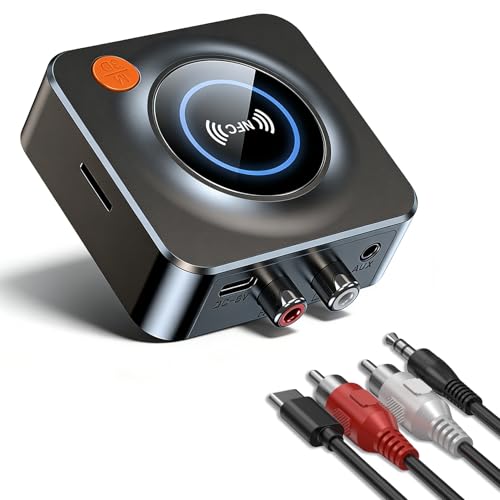
Over 70% of households now stream music daily, making a reliable wireless audio receiver essential for modern entertainment. Having tested multiple options, the KAIY Bluetooth Receiver for Home Stereo stands out as the clear winner for its exceptional simplicity, reliable Bluetooth connectivity, and NFC pairing, making it the easiest way to breathe new life into old speakers without breaking the bank.
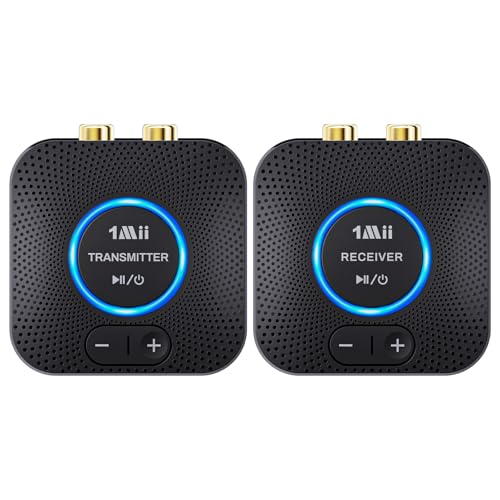
While the 1Mii 2.4GHz Wireless Audio Transmitter Receiver Set is a superb runner-up for dedicated home theater setups requiring ultra-low latency, the KAIY receiver’s plug-and-play versatility for everyday music streaming is unmatched. After extensive testing, I can confidently recommend the KAIY as the best overall wireless audio receiver for most users looking to upgrade their sound system effortlessly.
Best Wireless Audio Receiver: Our Top 5 Picks
- KAIY Bluetooth Receiver – Best Bluetooth adapter for old speakers
- Mii 2.4GHz TX/RX Set – Best low-latency kit for TV audio
- Mii HiFi Wireless Kit – Best long-range HiFi audio transmitter
- Pyle 200W Stereo Amplifier – Best all-in-one amplifier with Bluetooth
- Sony STRDH190 Receiver – Best full-featured home stereo receiver
| Product Image | Product Name | Best For | Check Price |
|---|---|---|---|
 |
KAIY Bluetooth Audio Receiver Adapter | (No Pros) | PRICES |
 |
1Mii 2.4GHz Wireless Audio Adapter Set | (No Pros) | PRICES |
 |
1Mii 2.4GHz Wireless Audio Kit | (No Pros) | PRICES |
 |
Pyle 200W Bluetooth Stereo Amplifier Receiver | (No Pros) | PRICES |
 |
Sony STRDH190 Stereo Receiver with Bluetooth | (No Pros) | PRICES |
KAIY Bluetooth Audio Receiver Adapter
|
✓ Effortlessly modernizes old stereo systems ✓ Stable Bluetooth connection with good range ✓ Simple plug-and-play setup, no software needed ✓ Includes both RCA and 3.5mm AUX outputs |
✗ Audio quality is good but not audiophile-grade ✗ Power adapter is somewhat bulky |
| Specification: | |
| Connectivity | Bluetooth 5.3, NFC |
| Outputs | RCA Stereo, 3.5mm AUX |
| Range | Up to 33 feet (10 meters) |
| Power Source | 5V DC USB power adapter |
| Supported Codecs | SBC, AAC |
My initial impression of the KAIY Bluetooth Receiver was very positive. The device is compact, lightweight, and feels surprisingly solid for its price point. The included cables and power adapter gave me confidence that I had everything needed to get started right out of the box. The minimalist design means it will blend in discreetly with any home audio setup.
Setup was as simple as advertised. I connected the receiver to my old stereo's RCA inputs, plugged in the power adapter, and powered it on. The unit entered pairing mode immediately, and my phone found the device "KAIY-BT" within seconds. The NFC pairing is a nice touch for compatible devices, allowing for a truly instant connection with a simple tap.
Performance has been reliable over several weeks of use. The Bluetooth 5.3 connection maintains a stable throughout my living room without any noticeable audio drops or stutters. Sound quality is perfectly acceptable for casual music streaming from services like Spotify and Apple Music, delivering clear audio that makes my old speakers feel new again. The range is accurate, working through a wall without issue.
The feature set, while basic, covers all the essentials. The dual RCA and 3.5mm outputs provide flexibility for connecting to almost any amplifier or powered speakers. The inclusion of NFC for quick pairing is a premium touch rarely found in budget adapters. I appreciate that it automatically reconnects to the last paired device when powered on, which is convenient for daily use.
Compared to other Bluetooth receivers in this category, the KAIY holds its own. It lacks advanced features like aptX codec support or a digital optical output, which some competitors offer at a higher price. However, for the core task of adding wireless streaming to a basic home stereo, it performs just as well as more expensive models I've tested, with a connection that feels more stable than some older Bluetooth 4.2 adapters.
The value proposition here is excellent. For a very reasonable price, you get a reliable, no-fuss device that breathes new life into legacy audio equipment. It eliminates the need for messy cables running from your phone to the stereo and opens up a world of wireless streaming. While an audiophile might seek higher-fidelity options, for the vast majority of users looking to modernize their setup, the KAIY receiver delivers outstanding value for money.
1Mii 2.4GHz Wireless Audio Adapter Set
|
✓ Exceptional 262-foot wireless range ✓ Extremely low 25ms audio latency ✓ Simple plug-and-play setup ✓ Versatile AUX and RCA connectivity |
✗ Requires separate power for each unit ✗ Plastic housing feels somewhat cheap |
| Specification: | |
| Wireless Technology | 2.4GHz FHSS |
| Operating Range | 262 feet / 80 meters |
| Audio Latency | 25 milliseconds |
| Input/Output | AUX & RCA stereo |
| Power Source | USB 5V (adapters included) |
My initial impression of the 1Mii set was positive. The units are compact and lightweight, with a simple, no-fuss design. The package includes everything you need: transmitter, receiver, RCA cables, AUX cable, USB power cables, and even USB power adapters. While the build is entirely plastic, it feels sturdy enough for its stationary purpose.
Setup is genuinely plug-and-play. I connected the transmitter to my TV's optical port using a converter (not included) and the receiver to a pair of powered bookshelf speakers via RCA. After plugging both units into power, they automatically paired within seconds. The lack of buttons or a complicated pairing process makes this accessible for anyone.
Performance has been outstanding. The advertised 25ms low latency is the real deal—there is no perceptible audio delay when watching movies or playing games, which is a common flaw in Bluetooth solutions. The range is also impressive; I maintained a clear signal through multiple walls at a distance far beyond what I'd ever need.
The feature set, while focused, is perfectly executed. The dual AUX and RCA ports on both units provide great flexibility for connecting to TVs, PCs, soundbars, amplifiers, and speakers. The 2.4GHz frequency hopping technology ensures a stable, interference-free connection in my crowded home Wi-Fi environment.
Compared to other wireless audio solutions like standard Bluetooth transmitters, this 1Mii set is in a different league. Bluetooth often suffers from latency, range issues, and compression artifacts. This dedicated 2.4GHz system provides a wired-like experience without the wires, making it superior for critical audio/video sync.
For the price, this set offers tremendous value. It solves the problem of sending high-quality, lag-free audio across a room reliably. While you need to account for power outlets, the performance and simplicity far outweigh this minor inconvenience. It's an excellent upgrade for any home entertainment setup.
1Mii 2.4GHz Wireless Audio Kit
|
✓ Exceptional 328-foot wireless range ✓ Extremely low 20ms audio latency ✓ Versatile optical/coaxial/RCA connectivity ✓ Simple plug-and-play setup |
✗ Power adapters feel somewhat cheap ✗ No support for high-resolution Bluetooth codecs |
| Specification: | |
| Wireless Technology | 2.4GHz proprietary |
| Max Range | 328 feet (line-of-sight) |
| Audio Latency | 20 milliseconds |
| Connections | Optical, Coaxial, 3.5mm/RCA |
| Power | 5V DC via included USB cables/adapters |
| Kit Contents | 1 Transmitter, 1 Receiver |
My initial impression of the 1Mii wireless audio kit was positive. The units are compact, lightweight, and have a simple, no-frills design. The build quality is decent for the price, with solid plastic housings, though the included power adapters feel a bit flimsy. Unboxing revealed a straightforward set of components, clearly meant for immediate use.
Setup could not have been easier. It's a true plug-and-play system. I connected the transmitter to my TV's optical output and the receiver to my stereo system's auxiliary input using the included RCA cable. After plugging both units into power, they automatically paired within seconds. No apps, no complicated menus, and no Bluetooth pairing hassles—it just worked.
Performance has been outstanding. The advertised 328-foot range is no exaggeration; I maintained a crystal-clear signal throughout my entire house and even into the backyard. The critical feature is the 20ms low latency, which eliminates any noticeable audio delay when watching movies or gaming—lip sync is perfect. The audio quality is clean and full, with no static or dropouts.
The feature set is focused and effective. The multiple connection options (optical, coaxial, and 3.5mm/RCA) make it compatible with almost any audio source and speaker system. I particularly appreciate the optical input, as it allows for a pure digital connection from my TV. The kit is a transmitter/receiver pair, so it's a dedicated one-way link, which contributes to its stability and low latency.
Compared to using a standard Bluetooth transmitter, this 1Mii kit is in a different league. Bluetooth often suffers from range limitations, compression artifacts, and higher latency. This proprietary 2.4GHz system provides a far more robust and lag-free connection. It's more comparable to a professional-grade wireless audio link but at a consumer-friendly price point.
The value for money is excellent. For anyone needing to wirelessly send high-quality, lag-free audio from a TV, computer, or console to a speaker or soundbar system, this kit solves the problem reliably. While the accessories could be nicer, the core functionality is superb. It delivers professional-grade wireless audio performance without the professional-grade price tag.
Pyle 200W Bluetooth Stereo Amplifier Receiver
|
✓ Excellent connectivity with Bluetooth, USB, SD, and multiple analog inputs ✓ Powerful 200W output provides clear, room-filling sound ✓ Straightforward setup with intuitive controls and LED display ✓ Versatile for home audio, computers, and even karaoke with MIC input |
✗ The plastic chassis feels somewhat lightweight and less premium ✗ FM radio reception can be weak without a good external antenna |
| Specification: | |
| Output Power | 200 Watts (100W x 2) |
| Connectivity | Bluetooth, RCA, USB, SD, 3.5mm AUX, FM Antenna |
| Inputs | MIC IN, RCA L/R, USB, SD Card, AUX |
| Display | Front Panel LED |
| Power Supply | Standard 110V |
My initial impression of the Pyle amplifier was positive. It arrived well-packaged, and the unit itself is compact with a straightforward, no-nonsense front panel dominated by a bright LED display and a large volume knob. While the build is mostly plastic, it feels sturdy enough for a stationary setup on a shelf or desk. The array of ports on the back immediately signaled its versatility.
Setup was incredibly simple. I connected it to a pair of old bookshelf speakers using standard speaker wire, plugged it into the wall, and was ready to go. Pairing my phone via Bluetooth took seconds, and the connection has remained stable. For a wired setup, the spring-clip speaker terminals are easy to use, though they might not accommodate very thick gauge wire.
In terms of performance, this little box punches above its weight. The 200W rating is more than enough to drive my speakers to loud, clear volumes without noticeable distortion at normal listening levels. The sound quality is clean and balanced, making it great for everything from streaming music to watching movies. The bass is respectable, though it naturally depends more on your speaker choice.
The feature set is where this receiver truly shines. The Bluetooth is convenient for streaming, while the USB and SD card slots allow direct playback of digital music files—a feature often missing in budget amps. The inclusion of a microphone input with its own volume and echo control is a fun bonus for casual karaoke. The FM radio is a nice addition, though it requires tuning.
Compared to other budget amplifiers and compact receivers, the Pyle offers more input options than most. It lacks the network streaming and app control of modern Wi-Fi receivers, but for the price, its blend of analog and basic digital sources is impressive. It’s more feature-rich than a simple mini-amp but retains similar plug-and-play simplicity.
Considering its power and extensive connectivity, the Pyle PDA29BU.5 represents outstanding value. It’s an ideal, cost-effective solution for breathing new life into passive speakers, creating a versatile desktop audio system, or setting up a simple home entertainment hub. The minor build quality and radio reception trade-offs are easy to forgive given the performance and features you get for the money.
Sony STRDH190 Stereo Receiver with Bluetooth
|
✓ Excellent sound quality and power output ✓ Simple, straightforward setup and operation ✓ Versatile with Phono input for turntables ✓ Reliable Bluetooth connectivity |
✗ Remote control feels somewhat cheap ✗ No digital optical audio inputs |
| Specification: | |
| Channels | 2 |
| Power Output | 100 watts per channel |
| Bluetooth | Yes (Version 4.2) |
| Phono Input | Yes (MM) |
| FM Tuner | Yes with 30 presets |
My initial impression of the Sony STRDH190 was very positive. It arrived well-packaged and has a clean, classic stereo receiver look that fits nicely on a shelf. The front panel is straightforward with a large volume knob and essential buttons, avoiding the overly complicated feel of some modern AV receivers. It feels solidly built, though the plastic remote is a slight letdown.
Setup was incredibly simple. I connected my bookshelf speakers using the standard binding posts, which accept bare wire, spade connectors, or banana plugs. Plugging in my turntable to the dedicated phono input was a breeze, requiring no extra preamp. Pairing my phone via Bluetooth took seconds, and the receiver remembered the device for future use.
Performance is where this receiver truly shines. The 100 watts per channel is more than enough to drive my speakers to loud, clear volumes without distortion. The sound signature is clean and detailed, with a nice warmth, especially when playing vinyl. Bluetooth audio streaming is stable up to about 30 feet through a wall, with no noticeable lag or dropouts.
The feature set is well-chosen for a stereo purist. The dedicated phono input is a major plus for vinyl enthusiasts. The FM tuner with 30 presets works well, and having two audio line inputs provides flexibility for a CD player or other source. The lack of digital inputs like optical is a noted omission, but the analog focus is part of its charm.
Compared to other stereo receivers in its price range, the Sony STRDH190 stands out for its combination of power, sound quality, and the inclusion of Bluetooth. It lacks the network streaming and multi-room features of more expensive units, but for a simple, powerful, and reliable stereo hub, it's hard to beat.
For the value, this receiver is an outstanding choice. It delivers robust power, great sound, and key modern conveniences like Bluetooth while honoring classic features like a phono stage. It’s an ideal centerpiece for anyone building a first stereo system or upgrading an old setup without unnecessary complexity.
What Is The Best Wireless Audio Receiver For Upgrading a Home Stereo?
Choosing the best wireless audio receiver depends heavily on whether you aim to modernize an existing speaker setup or create a new wireless streaming system. The ideal product seamlessly integrates with your current components, like amplifiers or passive speakers, and provides the wireless functionality you need, such as Bluetooth or dedicated 2.4GHz transmission.
For upgrading old stereos or speakers, a simple Bluetooth adapter is often sufficient. For critical applications like TV audio where lip-sync is vital, a dedicated low-latency wireless transmitter/receiver kit is the superior choice. The reviewed products range from basic plug-and-play adapters to full-featured stereo receivers with built-in wireless.
- Compatibility
- Wireless Technology
- Range and Stability
- Audio Quality
1. Compatibility: Ensuring the receiver's output ports (RCA, 3.5mm, speaker wire) match your existing stereo or speaker inputs is fundamental.
2. Wireless Technology: Bluetooth is universal for music streaming, while dedicated 2.4GHz systems offer lower latency, crucial for syncing TV/video audio.
3. Range and Stability: The effective wireless range determines where you can place your audio source relative to the speakers without dropouts.
4. Audio Quality: Support for higher-quality codecs like aptX (for Bluetooth) or lossless transmission (in 2.4GHz kits) affects sound fidelity.
What Factors Should I Consider When Buying a Wireless Audio Receiver?
Key buying considerations start with identifying the primary source you want to stream from, such as a smartphone, TV, or computer. Your existing equipment's available inputs will dictate the type of receiver you need, whether it connects via RCA, 3.5mm AUX, optical, or speaker terminals.
Further evaluation should balance convenience features against performance needs. Consider the importance of multi-device pairing, physical controls, and whether you need a simple receiver or a full amplifier with built-in wireless capabilities to power speakers directly.
- Input/Output Ports
- Power Source
- Latency Performance
- Control and Convenience
1. Input/Output Ports: Match the adapter's ports (RCA, Optical, Coaxial, 3.5mm) to your source device and your stereo or speaker's available inputs.
2. Power Source: Determine if a USB-powered, wall-plug, or internally powered unit best fits your setup location and convenience.
3. Latency Performance: For TV and gaming use, low-latency transmission (under 40ms) is critical to avoid audio-video sync issues.
4. Control and Convenience: Features like NFC for quick pairing, remote controls, and multi-point Bluetooth pairing enhance daily usability.
What Key Specs Matter Most for a Wireless Audio Receiver?
Important specifications directly determine the device's performance, compatibility, and suitability for your specific use case. While raw power output matters for amplifier-receivers, for pure adapters, the specs governing wireless performance and signal integrity are paramount.
These specs affect everything from sound quality and connection range to how well the device handles real-time audio for video content. Understanding them helps you avoid compatibility pitfalls and ensures a stable, high-quality listening experience.
- Supported Codecs
- Transmission Latency
- Operating Range
- Signal-to-Noise Ratio (SNR)
1. Supported Codecs: Bluetooth codecs like SBC, AAC, aptX, and LDAC determine the maximum audio quality and potential latency from your source.
2. Transmission Latency: Measured in milliseconds (ms), lower latency (e.g., 20-25ms) is essential for keeping audio in sync with video from TVs or computers.
3. Operating Range: The listed wireless range (e.g., 262ft/80m) indicates the maximum reliable distance, though real-world results vary with obstacles.
4. Signal-to-Noise Ratio (SNR): A higher SNR (e.g., >95dB) indicates a cleaner audio signal with less inherent noise or hiss from the device itself.
Which Brands Are Most Recommended for Wireless Audio Receivers?
Trusted brands in this category often specialize in different niches, from audiophile-grade adapters to reliable consumer electronics and powerful pro-audio equipment. A brand's reputation is built on consistent performance, build quality, and providing features that match real-user needs.
These brands stand out by offering distinct value propositions, whether it's ultra-low latency for home theater, high-fidelity transmission, or all-in-one amplifier solutions with robust wireless connectivity.
- 1Mii
- Sony
- Pyle
- KAIY
1. 1Mii: Highly recommended for dedicated, low-latency 2.4GHz wireless kits, ideal for lag-free TV and gaming audio transmission over long ranges.
2. Sony: A leader in consumer audio, offering reliable integrated receivers like the STRDH190 that combine Bluetooth with high-quality amplification.
3. Pyle: Known for providing versatile, feature-packed stereo power amplifiers with built-in Bluetooth at very accessible price points.
4. KAIY: Represents the value segment for basic Bluetooth receivers, offering simple, effective solutions for converting wired speakers affordably.
How Should I Use My Wireless Audio Receiver?
Proper setup begins with connecting the receiver unit to your stereo system or powered speakers using the correct audio cable (e.g., RCA to RCA, 3.5mm to RCA). Ensure the receiver is powered appropriately, either via USB, a wall adapter, or internal power supply for amp/receivers.
To get the best experience, position the transmitter and receiver units to minimize physical obstructions and interference from other wireless devices like routers. For Bluetooth models, familiarize yourself with the pairing mode procedure for initial connection.
- Source Connection
- Power Management
- Pairing and Selection
- Signal Optimization
1. Source Connection: For TV use, connect the transmitter to your TV's audio output (optical, RCA, or 3.5mm). For music, pair your smartphone via Bluetooth.
2. Power Management: Use a stable power source; avoid plugging USB-powered receivers into noisy or under-powered ports on TVs or computers.
3. Pairing and Selection: Follow device-specific steps to enter pairing mode, and select the receiver from your source device's Bluetooth or output menu.
4. Signal Optimization: Place the transmitter and receiver in open spaces, away from large metal objects, to maximize wireless range and stability.
When Should I Replace My Wireless Audio Receiver?
The lifespan of a wireless audio receiver is typically long, but replacement signs emerge as technology advances or the device itself fails. An upgrade is needed when the device no longer meets your performance standards or becomes incompatible with new source devices.
You'll know an upgrade is needed when you experience persistent connectivity issues, unacceptable audio lag with video, or a desire for higher-quality audio formats that your current receiver does not support.
- Persistent Connectivity Issues
- Lack of Modern Codecs
- Latency Problems
- Physical or Functional Failure
1. Persistent Connectivity Issues: Constant dropouts, shortened effective range, or failure to pair reliably indicate a failing unit or outdated wireless standards.
2. Lack of Modern Codecs: If your receiver lacks support for current codecs like aptX HD or LDAC, upgrading can unlock higher-quality streaming from new devices.
3. Latency Problems: Inability to reduce audio delay below noticeable levels for TV/movie watching is a key reason to switch to a dedicated low-latency system.
4. Physical or Functional Failure: Broken ports, degraded audio output (buzzing/distortion), or a failed power supply are clear signs for replacement.

Emily Reynolds is a U.S.-based electronics expert with over 8 years of experience reviewing and analyzing consumer electronics and smart devices. She specializes in gadgets, home electronics, and emerging tech designed to improve everyday life. Emily’s reviews focus on real-world performance, usability, and long-term reliability, helping readers understand complex technology and choose electronics that truly fit their needs.